

What Students Actually Do After Class in San Diego (It’s Not What You Think)
An insider look at what students actually do after class in San Diego—from shared housing and Taco Tuesday to local life—and why these everyday routines matter more for real English progress than most expect.

Most students arrive in San Diego with the same expectation.
English class in the morning.
Beach in the afternoon.
Surfing, sunsets, and social life in between.
What surprises many is this: the place where students start speaking more English isn’t the beach — it’s the shared spaces of everyday life. The BBQ area of their apartment building. A taco place they visit every week. A casual conversation with a neighbour at the pool.
If your goal is to learn English in San Diego, progress rarely comes from one big activity. It comes from small, repeatable moments that don’t feel like studying at all.
From what we see every year at CEL San Diego, English improves fastest when it stays “on” for a few extra hours after class — quietly, naturally, and without pressure.
The Expectation: Beach and Surf as the Main Plan
Before arrival, students usually imagine afternoons built around the ocean.
Surf lessons.
Beach workouts.
Relaxing after class.
All of that exists — especially in Pacific Beach. Many students enjoy it, particularly in the first weeks.
But in our schools, students usually realise something important: the beach is episodic, while progress is cumulative. Surfing once or twice a week is fun. It doesn’t automatically build fluency.
What matters more is what happens on ordinary days — when students still talk, plan, order food, and interact in English even when nothing special is scheduled.
Language progress in San Diego comes from repetition, not excitement.
What Students Actually Do After Class in San Diego
Students Interact With Locals More Than Expected
One of the most underestimated aspects of learning English in San Diego is how naturally students interact with Americans.
This happens especially for students staying in CEL Shared Apartments, where neighbours are typically American. Conversations start casually:
- a comment at the BBQ
- a short exchange by the pool
- a chat in the gym
- a question about weekend plans
Shared housing in San Diego often creates daily contact with locals.
From what we see every year, these low-pressure interactions are decisive. Students aren’t trying to speak “correctly.” They’re simply participating — and confidence follows.
%20-%20Sch%C3%BCler%20am%20Pool%20(Blog).jpg)
Ordering Food Becomes Everyday Language Practice
San Diego’s food culture plays a bigger role than many students expect.
Ordering tacos, burritos, bowls, or coffee almost always involves choice:
- sauces
- spice levels
- substitutions
- follow-up questions
These conversations repeat. The vocabulary repeats. The same staff appear week after week.
Food ordering in San Diego creates natural, repeated speaking opportunities.
Taco Tuesday is a good example — not because it’s special, but because it becomes routine. Students talk, joke, compare, and order together in English without thinking of it as practice.
Structured Activities — and What Happens After Them
Many students arrive expecting structured afternoon programmes — and they do find them. Weekly activities give students an easy way to connect, explore the city, and feel settled, especially in the first weeks.
What often surprises them is that their strongest English progress happens outside those activities, in the routines that form naturally afterward.
From what we see every year, activities open the door. Everyday life is what keeps English active.
Meetup Groups and Shared Interests
Beyond organised activities, many students look for ways to connect around shared interests.
They regularly use apps like Meetup to:
- meet locals through interest-based groups
- take part in fitness or sports activities
- connect around hobbies
San Diego’s culture makes these groups informal and welcoming. Students aren’t introduced as international students — they’re just people who show up.
San Diego encourages participation without pressure.
That makes spoken English easier to sustain, especially over longer stays.
Planning Weekend Trips Turns Into Real Communication
One of the strongest after-class language drivers is planning.
Students spend hours discussing weekend ideas in English:
- La Jolla
- Sunset Cliffs
- Encinitas
- Mission Bay
- Anza-Borrego
- Los Angeles or Joshua Tree
They negotiate transport, timing, budgets, and expectations — all in English, because it’s the only shared language.
From what we see every year, this collaborative planning leads to deeper engagement than passive experiences.
For many, it starts with discovering everyday life in Pacific Beach and expands naturally from there.
Please also read our article Pacific Beach Mornings & Sunset Evenings: A Perfect Day in San Diego
.jpg)
College Sports and US Culture — Light, Social, Unforced
Another after-class element students don’t always anticipate is college sports.
Not because they plan to follow teams — but because someone invites them to watch a game, join a watch party, or attend a local college event. Sometimes this happens through the school’s social programme; often it happens informally.
Students pick up:
- how Americans socialise around sports
- shared expressions and humour
- cultural references that don’t appear in textbooks
College sports introduce US culture in a social, accessible way.
It’s fun, not academic — and that’s precisely why it works.
Who This Experience Is — and Is Not — For
This Works Well If:
- you learn through daily use and want your English to sound more natural, not just correct
- you enjoy informal social settings
- you want English woven into real routines
- you’re curious about everyday US culture
This May Not Be Ideal If:
- you need tightly scheduled activities every day
- you prefer highly academic environments only
- you expect fast results without lifestyle engagement
- you dislike spontaneous interaction
Being honest about this helps students choose better — and progress more smoothly.
A Typical Student Moment
It’s Thursday evening.
A small group stands by the BBQ area of their apartment building. Someone is cooking. A neighbour joins the conversation. They talk about food, weekend plans, and where everyone is from.
Before leaving, they agree on Taco Tuesday next week.
No one mentions English.
But that’s exactly what’s happening.

What Students Realise Later
Months later, students rarely talk about specific lessons.
They talk about when English stopped feeling fragile.
From what we see every year, higher-level students benefit just as much — not by learning new grammar, but by refining how naturally they speak, react, and participate in real conversations.
Progress accelerates in places that are neither school nor home — cafés, shared spaces, neighbourhood routines. These “third spaces” keep English active without effort.
San Diego supports this quietly — and consistently.
Frequently Asked Questions
What do students do after English class in San Diego?
After class, students usually socialise, run errands, join fitness or interest-based groups, take part in organised school activities, or plan weekend trips — all in English.
Do students interact with locals when they learn English in San Diego?
Yes. Many students interact with Americans daily through housing, neighbourhood life, fitness activities, and casual social routines.
Is San Diego good for improving spoken English at higher levels?
Yes. For advanced learners, progress often shows up as faster reactions, more natural phrasing, and greater confidence in informal conversations rather than new grammar.
Is nightlife part of student life in San Diego?
For many students, yes — especially in Pacific Beach. Nightlife often complements everyday English use rather than replacing it.
Does the city really influence language progress?
Yes. The environment determines how often English is used and how comfortable students feel using it outside the classroom.
Key Takeaways
- Most English practice in San Diego happens unintentionally
- Interaction with locals is frequent and natural
- Simple routines like Taco Tuesday matter more than expected
- Planning trips and shared activities drive real communication
- The city quietly supports consistent language use
If you’re choosing where English can realistically become part of your daily life — not just your schedule — understanding how San Diego actually works makes the decision clearer.
Frequently Asked Questions



A Typical Week Learning English in San Diego — How Progress Actually Happens
What does everyday life look like during a language stay in San Diego? This article walks through a typical week—from morning classes to lunches, housing, weekends, and social routines—and explains why English often becomes part of daily life rather than a subject to study.

Pacific Mornings or Mountain Afternoons? How Daily Rhythm Shapes Learning English in Vancouver and San Diego
A grounded comparison of Vancouver and San Diego showing how daily rhythm — not just courses — shapes language progress, confidence, and transferable skills.
%20(blog).avif)
.avif)

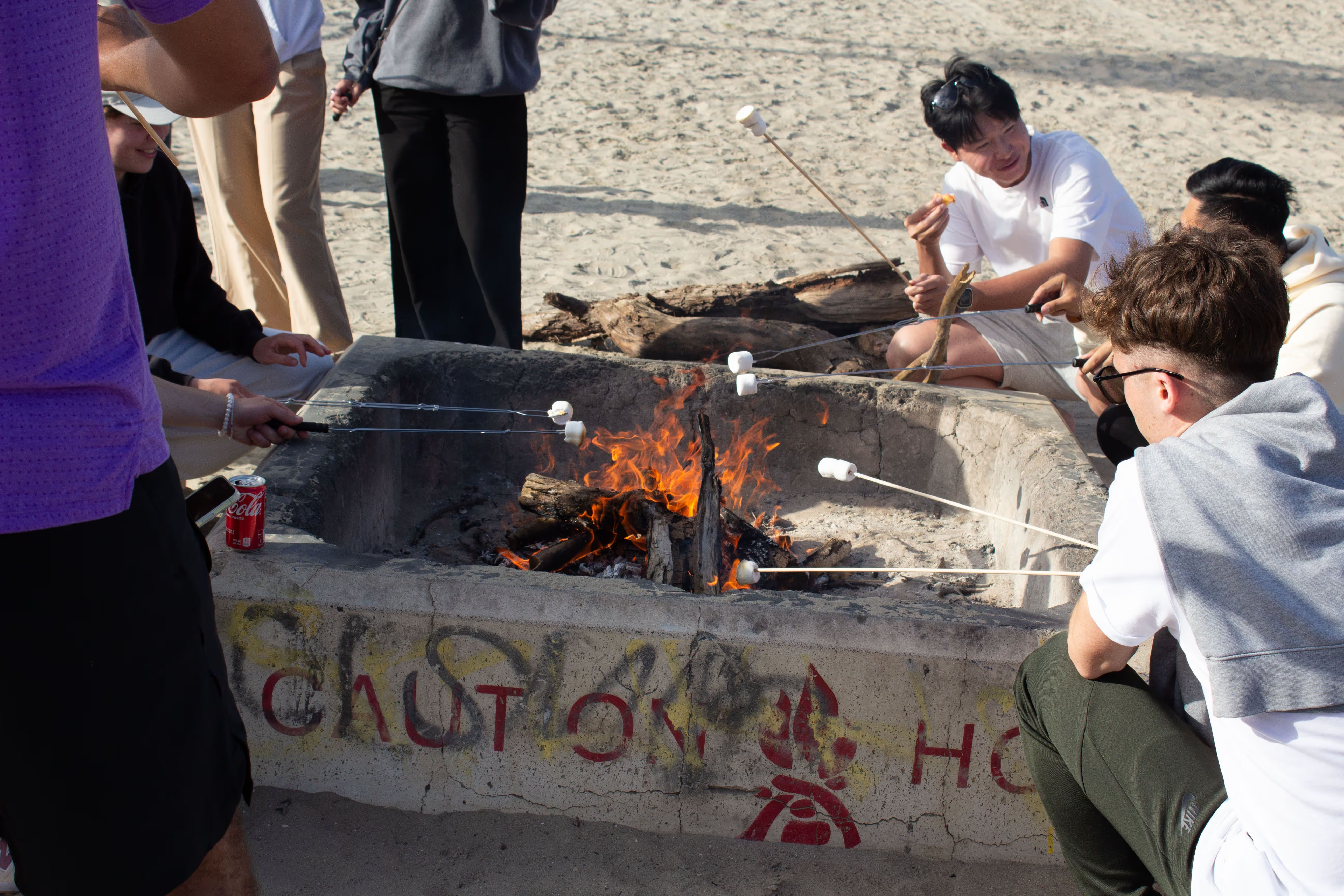
.avif)
Choc culturel ou révélation ? Comment réussir votre séjour linguistique à l’étranger
Transformez le choc culturel en révélation ! Découvrez comment un séjour linguistique aux États-Unis ou au Canada peut renforcer votre anglais, votre confiance et votre ouverture sur le monde.
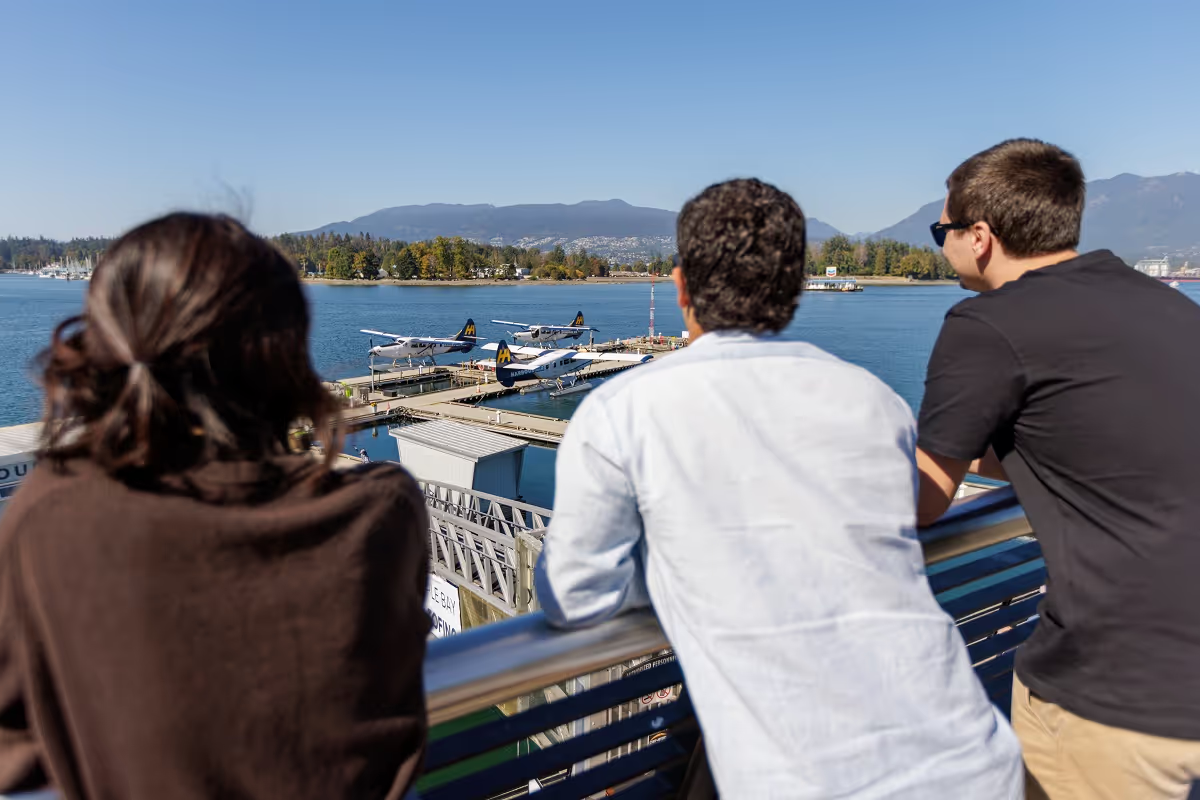
Découvrir le Canada : côte Ouest ou côte Est pour votre séjour linguistique ?
Côte Est ou Ouest ? Découvrez les différences entre Toronto et Vancouver – et pourquoi la côte Ouest est idéale pour un séjour linguistique au Canada réussi.
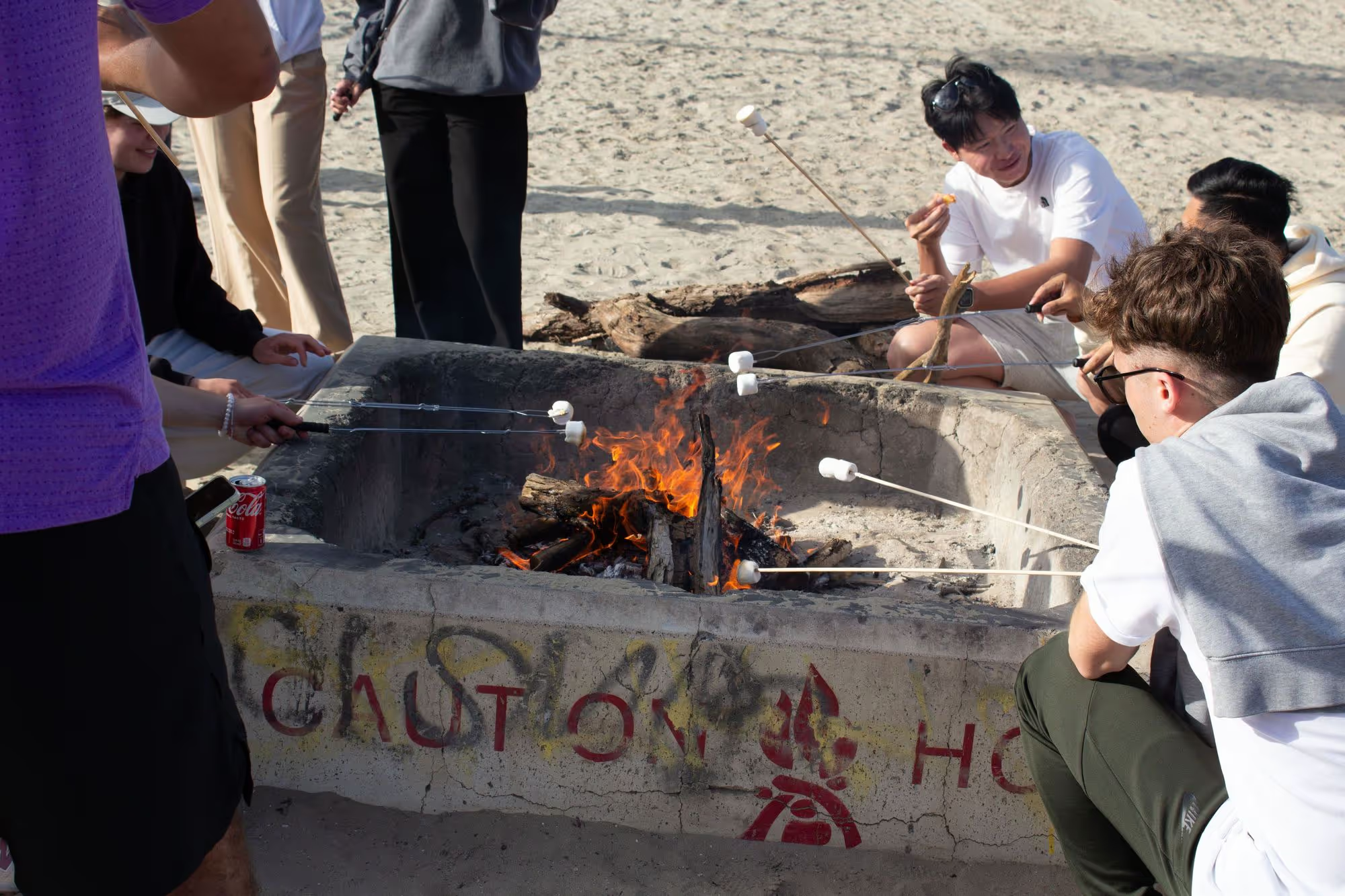
Feu de camp à Mission Beach – Une soirée inoubliable pendant votre séjour linguistique à San Diego
Vivez la magie d’un feu de camp à Mission Beach : un moment unique pour pratiquer votre anglais, rencontrer le monde et savourer votre séjour linguistique à San Diego.
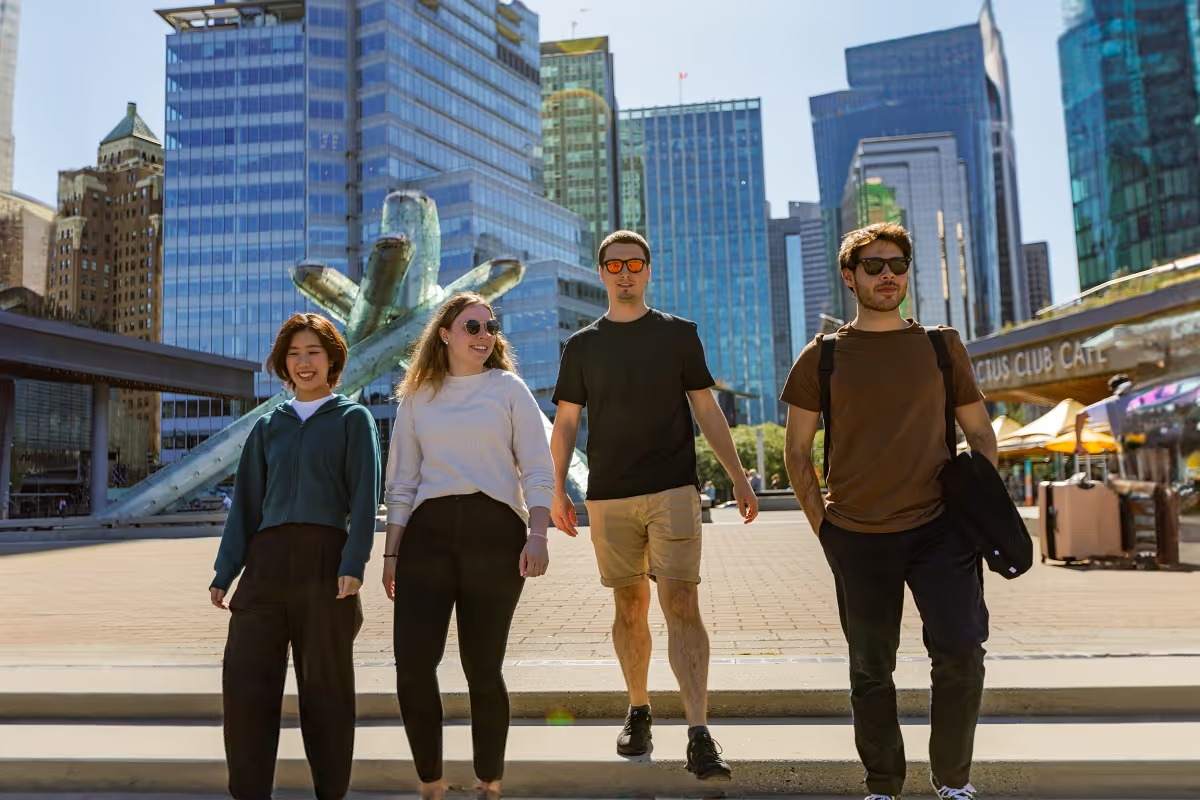
Wie es wirklich ist, das ganze Jahr über einen Sprachaufenthalt in Kanada zu machen – Ein Guide für Vancouver
Wie fühlt sich ein Sprachaufenthalt in Kanada wirklich an? Dieser Guide zeigt dir Vancouver durch alle Jahreszeiten – mit echten Einblicken in Lernen, Alltag und persönliche Entwicklung.

Von Deutschland nach Kalifornien – Lisa lebt ihren Traum in Santa Monica
Lisa aus Deutschland erfüllt sich ihren Traum: Ein Sprachaufenthalt in Santa Monica! Sie lernt Englisch, arbeitet bei CEL Los Angeles und genießt den kalifornischen Lifestyle zwischen Strand, Sonne und neuen internationalen Freundschaften.

English Learning: The Ins And Outs Of Learning English
For efficient English learning, consider peak learning times, dedicate ample study time, and enroll in a top English school like the College of English Language in San Diego for rapid progress.


