

The Moment Most Language Students Realize They’re Actually Improving
Many students learning English in Canada improve before they feel confident. This editorial insight explores the quiet moment when progress becomes undeniable — especially in Vancouver’s everyday learning environment.

There’s a moment many students don’t expect when they decide to learn English in Canada.
It doesn’t arrive with a certificate or a clear milestone. Most students only recognize it after it’s already passed.
English starts showing up differently. Thoughts move faster. Reactions come before translations. Conversations don’t feel easier — they feel more natural.
For students deciding where to learn English in Canada, this moment often matters more than course names, levels, or start dates.
We see this moment every year, especially in Vancouver. Not because the city promises faster results, but because daily life in Vancouver quietly requires participation. You’re not pushed into fluency. You’re pulled into it.
This shift — when English stops feeling like a subject and starts behaving like a tool — is what actually marks progress. And it tends to appear in similar ways across CEL Canada, regardless of level, background, or length of stay.
Progress Doesn’t Feel Messy — It Feels Wrong
Most students arrive expecting clarity.
Clear milestones.
Clear confidence jumps.
Clear signs they’re “getting better.”
What they experience instead is something less comfortable.
Progress doesn’t feel messy at first. It feels wrong.
From what we see every year, students become sharply aware of what they can’t say long before they notice what they can. Vocabulary gaps feel louder. Listening suddenly feels harder. Conversations move faster than expected — both in class and outside the classroom in Vancouver.
This isn’t regression. It’s recalibration.
Your brain is letting go of translation before it’s ready to replace it — which is why this phase feels unstable. Students who misread this moment often assume something isn’t working. In reality, this is the point where learning shifts from conscious effort to automatic processing.
Students who stay engaged through this phase almost always move past it — even if they don’t notice exactly when it happens.
Why Vancouver Accelerates the Realization
Vancouver accelerates this moment precisely because it doesn’t dramatize it.
The city doesn’t reward performance. It rewards participation.
You order coffee without rehearsing.
You clarify something instead of nodding politely.
You speak up in class before you feel fully ready.
None of these moments feel significant on their own. Together, they create momentum — especially for international students in Vancouver who are navigating English daily rather than occasionally.
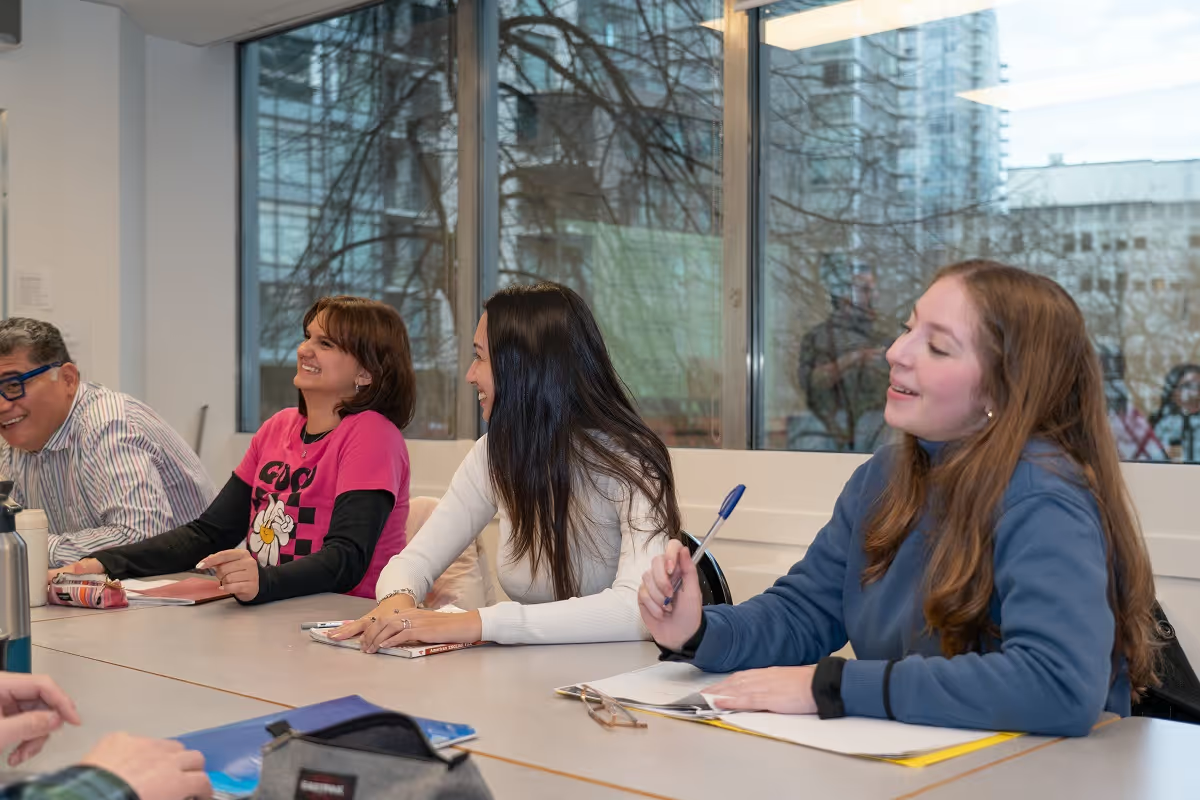
In a language school Vancouver environment like this, learning doesn’t stay confined to class hours. In small classes with a genuinely international mix, students stop hiding behind stronger speakers. They have to participate — politely, imperfectly, and consistently.
Over time, English stops being something they prepare and starts being something they rely on.
A common pattern across our locations is that students in Vancouver stop waiting for their English to feel “ready.” They start using it while it’s still forming — supported by teachers, classmates, and daily routines that make participation feel normal rather than exposed.
That’s usually when the realization begins.

The Shift Students Don’t Expect
The moment of realization rarely sounds like “My English is fluent now.”
It sounds more like:
- “I didn’t think about the grammar — it just came out.”
- “I noticed the mistake after I finished speaking.”
- “I understood the joke, not just the words.”
These signals are easy to miss — unless you know what you’re looking for.
They mark the transition from learning about English to learning through English.
For most students, real progress in a language course Canada isn’t a feeling — it’s a behavioral shift.
This is why environment consistently outperforms curriculum once the basics are in place. A solid language course Vancouver provides structure. The surrounding environment determines whether that structure turns into habit.

Who This Experience Tends to Work For — and Who It Doesn’t
Not every student experiences this shift at the same pace — or in the same way.
This approach tends to suit students who:
- Are willing to speak before feeling fully confident
- Accept mistakes as part of forward movement
- Learn through interaction, not just instruction
- Want English to integrate into daily life in Canada
It’s usually not the right fit for students who:
- Expect progress to feel smooth, linear, or emotionally comfortable
- Rely heavily on constant reassurance
- Prefer fully scripted interaction
- See language learning as a short-term task rather than a process
That doesn’t mean one approach is better than another. It means clarity about expectations leads to better experiences — and fewer surprises.
A Moment That Happens Again and Again
One evening, a student sits in a shared apartment kitchen in Vancouver.
They’ve spent the day in class, then groceries, then cooking with roommates from three different countries. At some point, mid-conversation, they realize they’re explaining something — not perfectly, not elegantly — but clearly enough that everyone understands.
No one switches languages.
No one slows down for them.
The conversation keeps moving.
Later, they realize they didn’t plan those sentences. They just happened.
That’s when most students stop wondering if they’re improving.

What Students Understand Later — With Distance
Looking back, many students describe the same realization in different words.
Confidence didn’t unlock progress.
Progress slowly made confidence unavoidable.
In our schools, students usually notice that their biggest gains didn’t come from trying harder — but from participating more honestly. Asking when unsure. Speaking when imperfect. Staying present instead of retreating into silence.
For students who worry about “doing it right,” this is often the most important insight: improvement doesn’t depend on feeling ready. It depends on staying engaged — especially during the phases that feel uncertain.
This pattern is particularly visible when students learn English in Vancouver, where classroom learning and daily life reinforce each other without pressure.
Frequently Asked Questions
How long does it take to notice real improvement when learning English in Canada?
Most students notice early signs within a few weeks, but the deeper realization often comes later — once English becomes part of thinking, not just studying.
How can I tell my English is improving even if I still make mistakes?
Improvement usually shows up as faster reactions, better understanding, and more natural responses — even while mistakes still happen.
What if I don’t feel that moment right away?
That’s common. Some students recognize progress gradually rather than suddenly. The absence of a clear “moment” doesn’t mean learning isn’t happening.
Is Vancouver suitable for beginners?
Yes, particularly for beginners who are open to gradual exposure. Vancouver’s communication culture supports participation without constant pressure.
How much of this progress happens in class?
Class provides structure and feedback. The realization usually forms when classroom learning connects naturally with daily interactions outside class.
What to Take With You
- Real progress often feels unstable before it feels rewarding
- Environment shapes outcomes more than most students expect
- Vancouver supports steady, everyday language use
- Participation comes before confidence — not after
- The realization arrives quietly, but it lasts
If this way of learning resonates — gradual, immersive, imperfect but supported — it’s worth exploring environments that allow that process to unfold naturally. This is why many students who choose to learn English in Canada ultimately look for cities like Vancouver.
Improvement doesn’t announce itself. You notice it when you stop waiting for it.
Frequently Asked Questions



When Is the Right Time to Study English Abroad? Timing, Seasons & Life Phases
A decision guide on when to learn English in the USA, exploring timing, life phases, language levels, and how real progress abroad actually happens—based on decades of student experience.
%20(1)%20(Blog).avif)
Why Your Flatmates Shape Your English More Than You Expect
Your English progress abroad depends less on class hours and more on daily life. This guide explains how housing choices shape real fluency.




Warum deine Mitbewohner dein Englisch stärker prägen, als du denkst
Beim Sprachaufenthalt in den USA entscheidet nicht nur der Unterricht über deinen Fortschritt. Die Unterkunft prägt, wie oft du Englisch wirklich nutzt.

Séjour linguistique Californie : pourquoi la côte Ouest convainc
Un guide fondé sur l’expérience pour un séjour linguistique en Californie. Découvrez pourquoi la côte Ouest convainc, comment San Diego et Los Angeles se distinguent et comment le quotidien influence les progrès linguistiques.

Regen, Berge & Motivation: Warum „perfekte Bedingungen“ beim Englisch lernen überschätzt werden
Ein Sprachaufenthalt in Kanada wirkt besonders nachhaltig, wenn Englisch Teil des Alltags wird. Vancouver bietet genau diese Mischung aus Routine, Realität und stetigem Fortschritt – jenseits perfekter Bedingungen.

Six Methods For Incorporating Technology In Language Learning
Utilize modern technology alongside traditional methods to enhance English skills, with the College of English Language in Los Angeles offering cutting-edge tools for immersive learning.

What Students Actually Do After Class in San Diego (It’s Not What You Think)
An insider look at what students actually do after class in San Diego—from shared housing and Taco Tuesday to local life—and why these everyday routines matter more for real English progress than most expect.

What's Your Purpose In Studying Abroad?
Before selecting a destination for studying abroad, it's essential to define your learning goals and evaluate how the experience will benefit you in the future.


