

When Is the Right Time to Study English Abroad? Timing, Seasons & Life Phases
A decision guide on when to learn English in the USA, exploring timing, life phases, language levels, and how real progress abroad actually happens—based on decades of student experience.

The question isn’t whether studying English abroad works. It does.
The real question is when it works best for you.
After years of working with international students across North America, one pattern keeps repeating: progress is rarely about the “perfect” season or age. It’s about alignment—between your life phase, your expectations, and how you learn best.
This guide is written to help you make that decision with clarity. Not hype. Not pressure. Just perspective—grounded in what we see every year in our schools across the USA and Canada. Over more than four decades—since CEL was founded in 1981—tens of thousands of students have come to learn English in the USA or Canada with very different goals and starting levels. That long view shapes what follows.
Rethinking the right time to study English abroad
Many students assume there must be an ideal moment to study English abroad: after graduation, before a job, during summer, or once they feel confident enough.
From what we see every year, the biggest breakthroughs often happen outside those assumptions.
A common pattern across our locations is this: students who wait for full confidence often delay progress. Those who arrive with curiosity—and accept some uncertainty—move forward faster, regardless of season or background.
Timing matters. But not in the way most people think.

The CEL Progress Curve™
To understand timing realistically, we use the CEL Progress Curve™.
It reflects how language development actually unfolds during a stay abroad—not on paper, but in daily life at an English school in the USA or Canada.
- Adjustment Phase – Getting used to constant English input
Everything feels intense. Listening takes effort, thinking feels slower, and social interaction can be tiring. Many students worry they are “doing badly” during this phase—even though this reaction is completely normal. With consistent routines—and people around you using English daily—this phase passes. - Activation Phase – English starts working in familiar situations
English begins to function in class, daily routines, and predictable conversations. Students still make mistakes, but communication starts to flow without constant translation. - Expansion Phase – Confidence grows across contexts
New situations appear: unfamiliar people, spontaneous plans, unexpected questions. English stretches beyond the safe zone, and confidence grows through use, not perfection. - Integration Phase – English becomes a functional tool, not a task
English supports real goals—studies, work, friendships. It’s no longer something to “practice,” but something to use.
The duration of each phase varies depending on the level students arrive with.
Students with basic knowledge often spend longer in the Adjustment Phase as their ears and confidence adapt. Intermediate learners usually move through Adjustment more quickly but spend more time in Expansion, where accuracy and flexibility grow together. Advanced students may reach Integration faster, yet still experience Expansion when navigating professional, academic, or unfamiliar social contexts—negotiating nuance, tone, and speed in real conversations.
The curve stays the same.
The pace changes.

How timing and life phase interact
Because this is a global decision guide focused on the USA, one illustrative example helps: San Diego. The city attracts international students throughout the year, across a wide range of ages and language levels, which makes it a useful reference point for how timing and life phase interact with real progress. There is no single “best” arrival moment here—students enter the learning process continuously, making the full progression from adjustment to integration easy to observe.
Students often assume progress depends on the season they arrive. In reality, life phase plays a much bigger role—whether students plan to learn English in the USA for a short period or a longer stay, the same progression applies.
Younger students (late teens) often move quickly through the Adjustment Phase because they’re less afraid of sounding imperfect. Social environments accelerate Activation and Expansion.
Students in their early to mid-20s often experience the smoothest overall progression. Motivation is clearer, routines form faster, and Integration tends to happen naturally with time.
Older students—often professionals or career switchers—sometimes need a little longer in Adjustment. But once they move into Activation, their progress is often deeper and more intentional. They often improve fastest when English links directly to real decisions: work, studies, or relocation.
While most students are between 16 and 35, age itself is rarely the deciding factor. What matters more is life timing. We regularly see professionals in their late 30s or 40s move through the same progression—sometimes even faster—because their motivation is clearer and their goals more defined.
Season affects atmosphere. Life phase affects learning depth.

Who this is (and is not) for
This is for you if:
- You want English to become part of your daily life, not just a subject
- You’re open to learning through interaction, not just instruction
- You accept that growth includes moments of uncertainty
This is not for you if:
- You expect fluency without daily use
- You need constant comfort and predictability
- You see language learning as a short-term task rather than a process
Being honest about this saves time—and frustration.
A typical student moment
It’s week three.
A student stands in a shared kitchen, trying to explain a simple recipe in English. There’s a pause. A word is missing. Someone waits. The student gestures, laughs, tries again—and the message lands.
The conversation continues. Nobody switches languages.
Later, the student realizes something quietly important: I didn’t translate first.
That’s often when the Expansion Phase begins—not confidently, but naturally. This is why “the right time” is often when you can live in English daily.

What students realize later
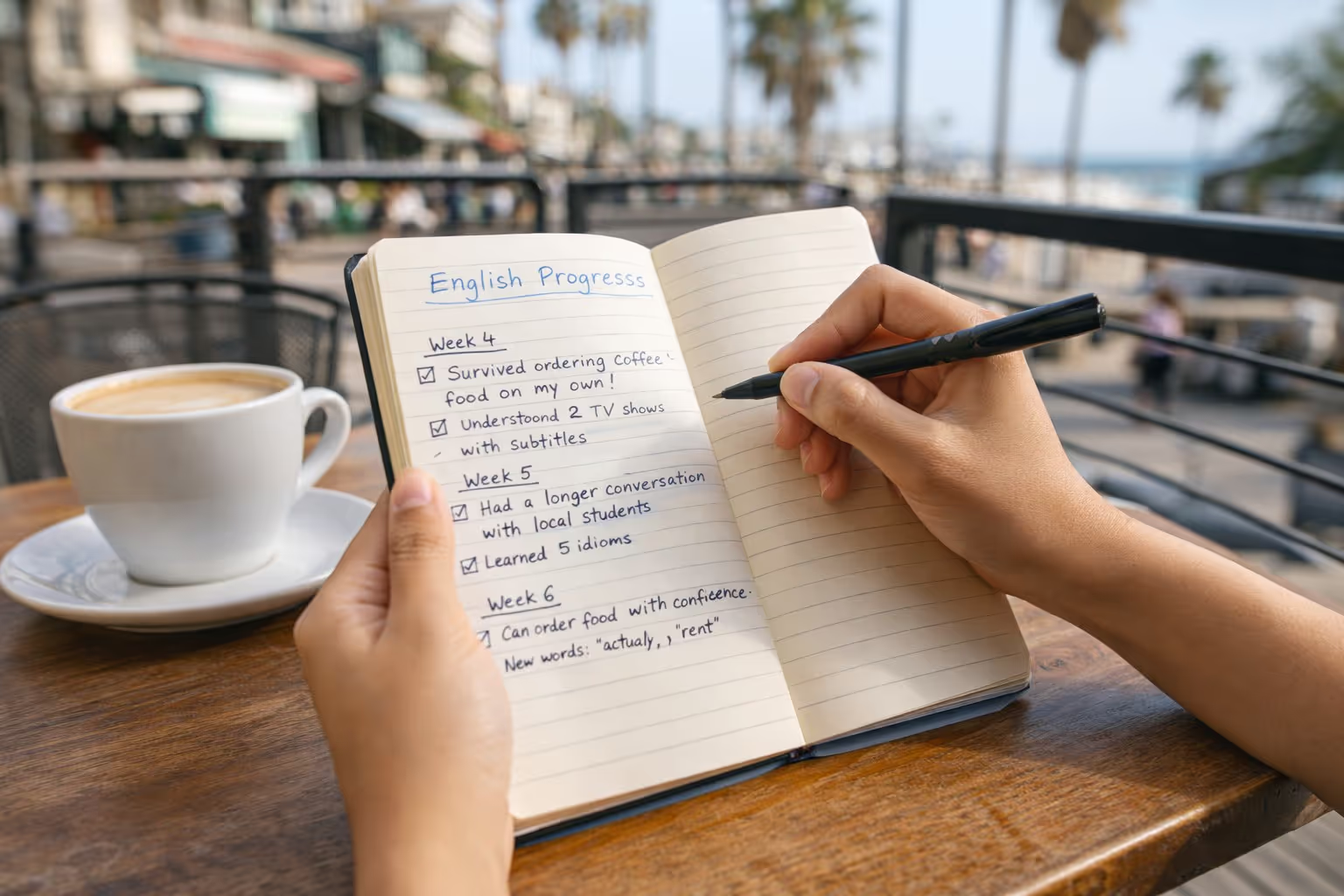
Looking back, most students say the same thing: they overestimated timing and underestimated participation.
From what we see every year, students who accept an imperfect start reach Integration faster than those waiting for ideal conditions. Even advanced learners often say the biggest gains came not from grammar, but from handling complex conversations under real pressure.
Progress rarely begins when life is calm.
It begins when routines form. So the best timing is usually the period when you can commit to routine—not perfection.
Frequently asked questions
When is the best time to learn English in the USA?
There is no universal best time. The right moment is when your life phase allows daily use of English—inside and outside class—not when conditions feel perfect.
Is there a best age to study English abroad?
No. Younger students often adapt socially faster; older students tend to apply learning more strategically. Progress depends more on engagement than age.
Does season really matter?
Less than expected. Quieter seasons support routine; busier seasons increase interaction. Both can work when expectations are realistic.
How long does it take to see progress?
Most students notice change once daily English stops feeling like constant effort and starts functioning naturally in familiar situations.
Should I wait until my English improves before going?
Usually not. Real-world exposure accelerates learning and reduces fear of mistakes—at any level.
Key takeaways
- There is no universal “perfect moment”
- Progress follows a curve, not a schedule
- Entry level affects pace, not potential
- Life phase matters more than age or season
- Consistent participation beats ideal conditions
Whether you plan to learn English in the USA, study English in Canada, or choose another English-speaking environment, the better question isn’t when is everything ready?
It’s: Am I ready to engage—even imperfectly?
That’s usually where progress begins
Frequently Asked Questions



The Moment Most Language Students Realize They’re Actually Improving
Many students learning English in Canada improve before they feel confident. This editorial insight explores the quiet moment when progress becomes undeniable — especially in Vancouver’s everyday learning environment.
%20(1)%20(Blog).avif)
Why Your Flatmates Shape Your English More Than You Expect
Your English progress abroad depends less on class hours and more on daily life. This guide explains how housing choices shape real fluency.



.jpg)
Sorties, plages, rencontres : la vie étudiante à CEL San Diego
À CEL San Diego, la vie étudiante se vit entre plage, sorties et rencontres internationales. Apprenez l’anglais dans une ambiance conviviale, rythmée par des activités culturelles, sportives et sociales sous le soleil californien.
Pourquoi votre logement influence votre anglais plus que vous ne le pensez
Lors d’un séjour linguistique aux USA, le logement joue un rôle central dans l’usage réel de l’anglais et la progression.

Benefits Of Storytelling In Learning A Second Language
Learn English fluently through storytelling, a method akin to acquiring your mother tongue. Join the College of English Language in California for tailored courses and vibrant international exposure.
%20(Blog).avif)
Séjour linguistique au Canada – Tous nos conseils pour bien choisir ton logement
Comment bien choisir ton logement pour ton séjour linguistique au Canada ? Famille d’accueil, Student House ou appartement – découvre nos conseils

A Quick Guide To Modals In English
Learn modal verbs effectively at the College of English Language in California, offering expert teaching and convenient locations in San Diego, Los Angeles and Vancouver.

Reasons To Learn English In San Diego
San Diego's perfect blend of weather, entertainment, nightlife, cuisine, universities, and job prospects makes it an optimal destination for English learners. Choose our school for top-notch education in this dynamic city!


