

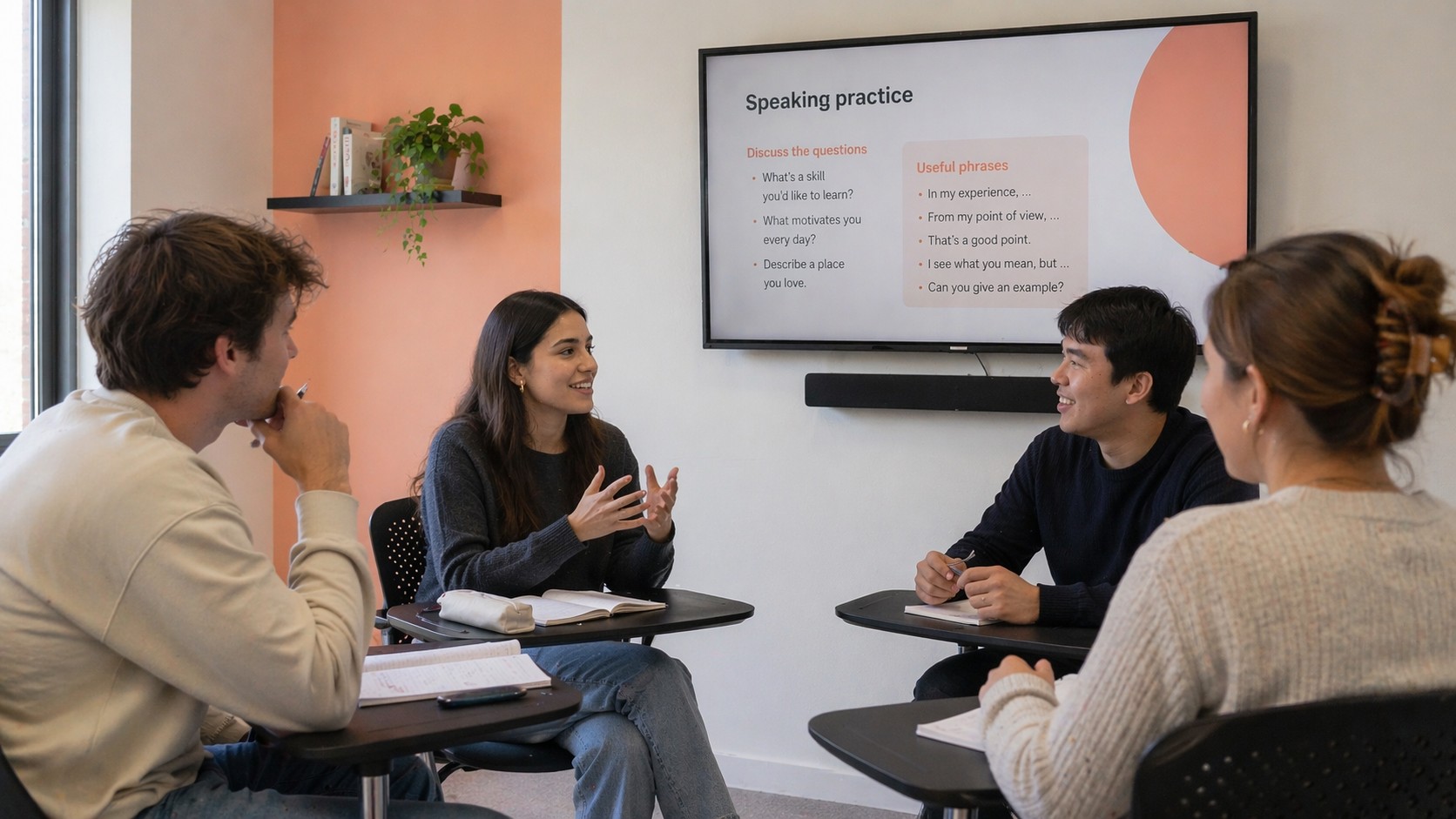
Learning English typically takes 4–8 months in immersion or 1.5–3 years part-time, depending on intensity and environment.
Learning English is often presented as either extremely fast (“3 months to fluency”) or frustratingly slow (“years of study”). The reality is more structured — and more predictable — than most people think.
For most learners, reaching a confident conversational level (B1–B2) takes:
- 4 to 8 months in an immersive, full-time environment
- 1.5 to 3 years when studying part-time at home
The difference is not talent — it’s intensity, consistency, and environment.
If you're considering a structured program, you can explore options to learn English abroad — for example in Vancouver or San Diego, where immersion plays a key role in faster progress

How Long Does It Take to Learn English? (Quick Answer)
- 4–8 months in immersive, full-time environments
- 1.5–3 years when studying part-time
Reaching advanced levels (C1–C2) requires additional time and continued exposure.
Typical English Learning Timeline
- Beginner to basic conversation (A1 → B1): 3–5 months (immersion)
- Confident communication (B1 → B2): 2–3 additional months
- Advanced fluency (B2 → C1): 3–6+ additional months
In this guide, you’ll see a realistic timeline based on how students actually progress, not theoretical estimates. If you're considering a structured program, you can explore options to learn English abroad programs in destinations like Vancouver or San Diego, where immersion plays a key role in faster progress.
English Learning Timeline at a Glance
- A1 → B1 (basic conversation):
3–5 months (immersion) / 9–18 months (part-time) - B1 → B2 (confident communication):
2–3 months / 6–12 months - B2 → C1 (advanced fluency):
3–6+ months / 12–24+ months
These ranges reflect consistent learners in structured programs.
While many learners focus on reaching B2 as a practical goal, it’s worth noting that progress beyond this level is common in intensive learning environments. Learners who continue their studies over a longer period often move from B2 into advanced levels such as C1 or even C2, especially when they maintain a high level of immersion and consistency.
For most learners, the key question is not how long English takes in theory — but how much progress you can realistically make within the time you plan to study.

Where Do You Fit in This Timeline?
If you’re unsure where you stand, here’s a quick reference:
- You’re a beginner:
Expect around 4–8 months to reach confident communication (B2) in immersion - You already learned English in school:
Many learners in this category reach B2 in 3–6 months, depending on consistency - You understand English but struggle to speak:
You will often see noticeable improvement within the first 4–8 weeks
How Long It Takes to Learn English by Level (A1 to C1)
The Common European Framework of Reference for Languages (CEFR) is the international standard used to measure language proficiency from A1 (beginner) to C2 (proficient).
A1 → A2 (Beginner to Elementary)
Time:
- 6–10 weeks (immersion)
- 4–6 months (part-time)
A2 → B1 (Elementary to Intermediate)
Time:
- 8–12 weeks
- 6–9 months
B1 → B2 (The Critical Level)
Time:
- 8–12 weeks
- 6–12 months
B2 → C1 (Advanced)
Time:
- 3–6+ months
- 12–24+ months
Why Learning English Takes Longer Than You Expect
- Plateau effect: progress becomes less visible
- Passive vs active knowledge: speaking lags behind understanding
- Depth over basics: advanced English requires precision
How Many Hours Does It Actually Take?
Institutions like University of Cambridge estimate:
- 100–200 hours per CEFR level
- 600–800 hours to reach B2
In practice:
- ~600 hours =
- 4–8 months full-time
- 1.5–3 years part-time

Learning English at Home vs Abroad
At Home
- Slower speaking progress
- Limited exposure
Abroad
- Constant exposure
- Daily speaking practice
In destinations like Vancouver or San Diego, English quickly becomes part of daily life.
How Fast Can You Learn in Immersion?
- 4–6 weeks: noticeable improvement
- 8–12 weeks: one CEFR level
- 4–8 months: realistic path to B2
In structured programs, learners progress around one level every 8–12 weeks. You can explore structured English courses designed around this progression. At CEL, this typically corresponds to about 10 weeks per level.
.jpg)
How Long Should You Study Abroad?
- 4 weeks: confidence boost
- 8–12 weeks: real progress
- 16–24+ weeks: transformation
Most students start with 8–12 weeks, then extend. You can compare available course options and durations here.
What Level Do You Really Need?
- B2: practical fluency
- C1–C2: advanced / professional
Many learners start with B2 and continue further.
FAQ
How long does it take to learn English?
It takes 4–8 months in immersion or 1.5–3 years part-time.
Can you learn English in 3 months?
You can improve significantly, but not reach full fluency from zero.
Is it faster to learn English abroad?
Yes. Immersion accelerates progress significantly.
Next Step: Planning Your English Learning Timeline
- Identify your current level
- Define your target level
→ B2 for most learners
→ C1+ for advanced goals - Choose your duration
Once these three points are clear, you can explore the most suitable English program and duration for your goals.
Most students start with 8–12 weeks, then extend based on progress.







.avif)


.jpg)
.jpg)


