


For many students today, studying abroad is no longer about ticking boxes. It’s not just go somewhere English-speaking, take classes, come home. The decision has become more nuanced — especially for those who want to learn English in Vancouver while staying grounded in real life, not a curated campus bubble.
Vancouver is a strong choice for students who want to learn English through daily life, not just through structured classroom instruction.
The city keeps appearing on shortlists for students who hesitate when they hear words like “party destination” or “tourist hotspot.” It’s often considered quietly, sometimes cautiously — and then chosen decisively.
If you’re exploring the CEL Vancouver page, this page is meant to help you decide whether the city — and the learning environment it creates — genuinely matches how you learn, live, and grow.
At a glance
Vancouver suits students who want steady, real-world English progress rather than a typical study-abroad experience. It works across levels, offers strong academic support, and rewards consistency, integration, and long-term engagement over intensity or spectacle.
Why Many Students Choose to Learn English in Vancouver Differently
One common assumption is that a good study abroad destination needs to feel exciting from day one. Big landmarks. Loud nightlife. Constant stimulation.
From what we see every year, many students who choose Vancouver are actively stepping away from that idea.
Vancouver doesn’t perform for visitors. It functions for residents. English is used naturally — in cafés, workplaces, shared apartments, and community spaces. You’re not surrounded by students speaking their first language all day, nor by locals whose jobs depend on serving you.
Many students arrive with elementary or low-intermediate English. In the early weeks, what matters most is structure and support — building confidence before independence grows. As routines settle in, English becomes part of daily life rather than something you “switch on” only in class.
This makes progress feel steadier and more transferable. Students don’t just perform English — they keep it.
In our school, students usually notice this shift gradually: progress doesn’t come from excitement, but from consistency.

The CEL Growth Zone Model™ — Why Vancouver Creates Sustainable Progress
To explain why Vancouver attracts a specific type of student, we use the CEL Growth Zone Model™.
In simple terms, progress happens best when students operate in a zone that is:
- Comfortable enough to feel safe and supported
- Challenging enough to require daily effort and adaptation
Too much comfort leads to stagnation. Too much pressure leads to withdrawal.
The Growth Zone sits in between.
This balance is subtle — and easy to underestimate before arrival.
The model helps explain why certain cities accelerate learning for some students — and slow it down for others.
Applying the Growth Zone Model™ to Vancouver
1. Academic Structure Without Institutional Pressure
Our language school in Vancouver operates within a broader professional and social ecosystem. Students feel part of a city, not a campus.
Classes provide clear structure, small groups, and personal attention — especially important at lower levels. Outside the classroom, the city doesn’t revolve around students, which gently encourages real-world use of English as confidence grows.
Vancouver’s international character reflects Canada’s broader openness — diverse, regulated, and education-focused without being rigid.
This balance often suits learners who want guidance without feeling institutionalized.
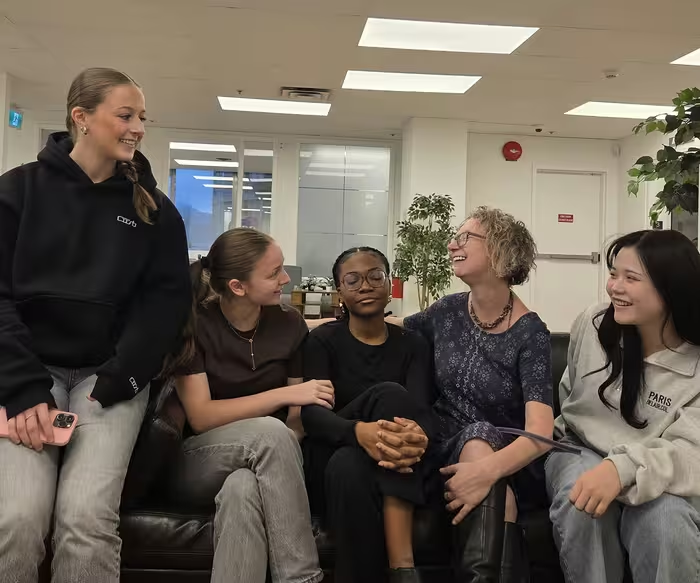
2. Social Integration That Develops Naturally
Vancouver’s energy is steady rather than overwhelming. Social life tends to be layered rather than obvious.
Students meet others at similar levels and stages of learning, while English functions as a shared language across cultures. This creates space to practice without pressure — whether through shared housing, everyday errands, or informal social moments.
A common pattern across our locations is that students who stay longer — including those who start at lower levels — become more confident speakers here because English use extends beyond structured settings.
If you are planning your own course, our detailed guide explains how staying longer can support more lasting English progress.
Weekends often become a mix of shared meals, outdoor time, and small group activities — simple, but social.
3. Space to Focus, Not Just to Consume
Nature plays a subtle role. Not as a checklist of activities, but as breathing room.
Students often describe Vancouver as a place where they can slow down, reflect, and focus. That mental space supports steady learning — especially for those combining language study with academic, personal, or professional transitions.
This is where studying English in Vancouver becomes less about short-term intensity and more about sustainable growth.
If you’re comparing the best English schools in Vancouver, the key question isn’t whether the city is exciting enough — but whether its rhythm matches how you learn best.
Who This Is — and Is Not — For
This is for you if:
- You want steady progress rather than fast but fragile gains
- You value structure and support, while gradually building independence
- You’re open to meeting people from different backgrounds at similar learning stages
- You want a city that feels lived-in rather than staged for students
This may not be for you if:
- You rely on constant stimulation to stay motivated
- You expect instant friendships without structured opportunities or personal effort
- You want nightlife or tourism to drive your experience
- You prefer highly centralized, campus-style environments
Choosing Vancouver is often less about what the city gives you — and more about how you engage with it over time.
A Typical Student Moment
It’s a Tuesday evening. Class ended hours ago.
A student who arrived three weeks earlier is sitting in a shared kitchen, listening more than speaking. The conversation moves from weekend plans to work schedules to everyday problems — all in English, all unplanned.
At some point, they realize they’ve followed everything without translating in their head. No breakthrough moment. No applause.
Just a quiet recognition: this is starting to feel normal.
That’s often how progress looks here.

What Students Often Realize Later
Many students only understand Vancouver’s impact after they leave.
They notice that their English didn’t just improve — it stabilized. They’re comfortable speaking with different accents, navigating uncertainty, and expressing nuance.
From what we see every year, this outcome is common among students who didn’t choose Vancouver for excitement alone, but for alignment with how they learn and live.
Enjoyment in Vancouver tends to come quietly — through connection, routine, and a sense of belonging rather than spectacle.
Support doesn’t disappear outside the classroom — it simply becomes less visible as students gain confidence.
FAQ
Is Vancouver a good place to learn English if I’m already intermediate or advanced?
Yes — and not only at higher levels. Many students begin in Vancouver with basic or intermediate English and benefit from supportive classes and clear structure. As their level increases, the city itself becomes a classroom, offering constant exposure to real, unsimplified English in academic, professional, and social settings.
Will I meet international students or mostly locals?
Both. Vancouver is diverse, but not dominated by one student group. Students always find others at similar levels and stages, while English remains the shared language across cultures.
Is Vancouver too “quiet” for a study abroad experience?
For some students, yes. For others, that calm creates focus. Vancouver’s social life is present but not forced, which suits learners who value routine and steady engagement over constant stimulation.
How does Vancouver compare to more “classic” study abroad cities?
Vancouver emphasizes integration over entertainment. The experience feels closer to living abroad than visiting — a distinction that matters depending on your goals. For a direct Canadian comparison, see how the student experience in Vancouver compares with Toronto.
How much should I budget to study English in Vancouver?
Your total budget depends on course length, accommodation and everyday spending. For a detailed breakdown, explore the financial side of planning an English course in Vancouver.
Key Takeaways
- Vancouver attracts students seeking depth rather than distraction
- Progress is built through routine, not intensity
- Support and structure come first, independence follows
- The city rewards consistent engagement across all levels
- It’s a strong fit for long-term language and personal growth




.avif)



%25252520(84)%25252520(blog).avif)