San Diego is one of the safest major cities in the United States. In 2024, WalletHub ranked it first for safety among the 20 largest US cities — a position supported by two consecutive years of declining crime and a violent crime rate substantially lower than Los Angeles, Boston, New York City, and Miami. For international students and their families choosing where to study English in the US, that record matters. This post lays out what the data shows, including what students should know about the specific neighborhood where they will live and study.
Yes — San Diego is widely considered one of the safest large US cities for international students, with consistently low violent crime rates and a student-friendly beach neighborhood in Pacific Beach.
At a Glance
- San Diego ranked #1 safest among the 20 largest US cities (WalletHub, 2024)
- Violent crime rate: approximately 440 per 100,000 residents — the lowest of any major English-study city in this comparison
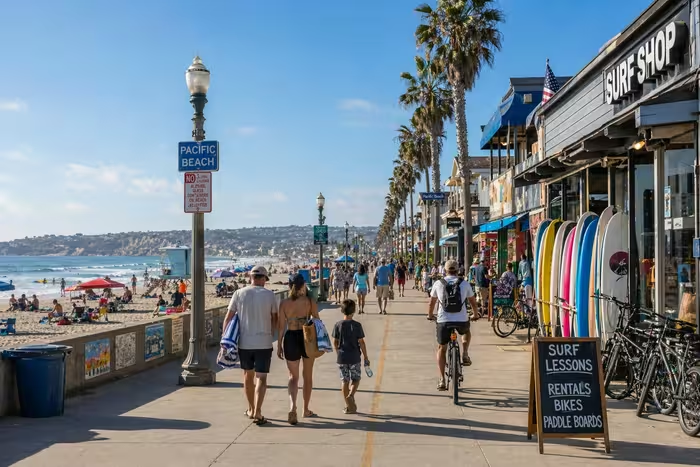
- CEL's campus is on Hornblend Street in Pacific Beach — a coastal residential neighborhood that is calm during the day and more active near its bar strip in the evenings
- Most CEL students in college-arranged housing live in Pacific Beach
- Basic urban safety habits — traveling in groups at night, keeping valuables secure — address the realistic day-to-day risks
Is San Diego Safe Compared to Other Major US Study Cities?
For students considering studying English in the US, the choice of city often comes down to a short list. San Diego sits clearly at the safer end of that list.
In 2024, WalletHub's analysis of violent crime, property crime, natural disaster risk, and financial security ranked San Diego first among the 20 largest US cities. Overall crime in the city fell for the second consecutive year in 2023, continuing a downward trend across multiple crime categories (San Diego Police Department Annual Crime Report, 2023).
Violent Crime Rates: San Diego vs. Peer Cities
| City | Violent crime rate (per 100,000 residents) | Year | Source |
|---|---|---|---|
| San Diego | 440 | 2023 | San Diego Police Dept. (NIBRS) |
| Miami | 474 | 2024 | Miami-Dade Police Dept. |
| Boston | ~619 | 2024 | Boston Police Dept. |
| New York City | 636 | 2023 | NYPD / Council on Criminal Justice |
| Los Angeles | 729 | 2024 | LAPD |
These figures are approximate. Crime is measured differently across cities, so direct comparisons have limits. Figures are sourced from each city's law enforcement agency.
San Diego is the lowest figure in the table by a clear margin. Los Angeles — the nearest English-study alternative — records a violent crime rate 66% higher. Boston, a major East Coast ESL destination, sits at approximately 619 per 100,000. New York City and Miami fall between them.
San Diego's consistent performance across different safety ranking systems suggests this is not a one-year result. The WalletHub ranking, the SDPD trend data, and the city comparisons all point in the same direction.
If you are deciding between cities, San Diego and Los Angeles are the most common comparison for students on the West Coast — this post covers both in detail, including cost, lifestyle, and campus experience: San Diego vs. Los Angeles: Where to Learn English in California.
In practice, this means students can move around Pacific Beach, attend classes, and meet friends after school without the safety concerns common in many larger US cities.

Pacific Beach, San Diego — Where CEL Students Study and Live
CEL's San Diego campus is on Hornblend Street in Pacific Beach, San Diego, California — a coastal neighborhood between Mission Bay to the south and Bird Rock to the north. Most students in CEL's college-arranged housing also live in Pacific Beach.
What the Neighborhood Is Actually Like
Pacific Beach is a beach town within a city. The daytime environment is unhurried: residential streets, surf shops, and cafés along Garnet Avenue, families at the beach, and a steady flow of tourists. Students walking from class to the ocean, grabbing food on Garnet, or sitting outside to review vocabulary are in a low-risk environment that feels closer to a coastal resort than an urban center.
The neighborhood has an active bar strip concentrated along the southern boardwalk, which sees more activity on weekend evenings. This is relevant context for night-time habits — covered in the practical section below — not a reason to avoid the area.
On weekday afternoons, students typically make the short walk from campus to the beach, or take a table at one of the cafés on Garnet before the evening. Class sizes are small — an average of 7 students, maximum 12 — which means teachers know each student individually, and students leave each day knowing the people around them. That level of visibility carries into the school environment itself: no one goes unnoticed for a week in a class of seven.
For a sense of what daily life in Pacific Beach looks like from morning to evening: Pacific Beach Mornings to Sunset Evenings. More on after-class life in the neighborhood: Learn English in San Diego: After Class. Student accommodation options are detailed here: CEL San Diego Housing.
What to Know Before Exploring Beyond Pacific Beach
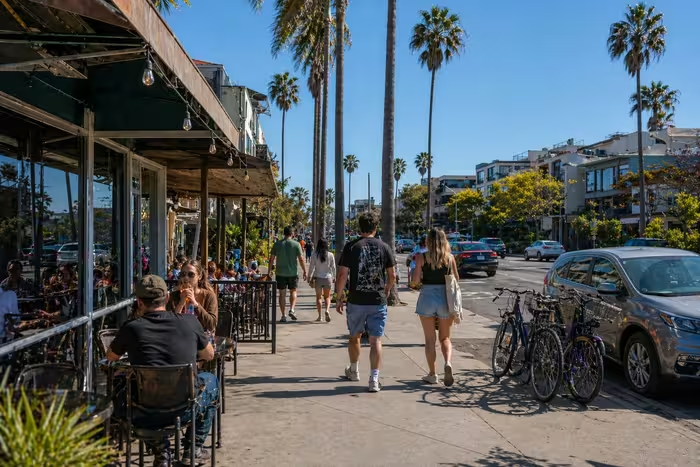
Most student activity stays close to the coast, and the areas students regularly visit are low-risk. A brief orientation to what to expect across the city:
Areas Students Visit Without Concern
Balboa Park, Old Town, Little Italy, La Jolla, Coronado Island, Hillcrest, and the Gaslamp Quarter (during the day and early evening) are all areas where students spend time comfortably. San Diego's MTS trolley and bus network connects most of these reliably during daylight hours.
A Day Trip to Tijuana
San Diego sits 17 miles from the US-Mexico border, and Tijuana is one of the most-visited border cities in the world. Many students make the trip during their stay — it is a 45-minute drive or an easy trolley ride to the border crossing from Pacific Beach.
Crossing into Mexico means different safety rules apply. The practical guidance: use official border crossings (San Ysidro is the main one), travel during daylight hours, stay in the established tourist areas (Zona Río and Avenida Revolución), and avoid carrying large amounts of cash. With those basics in place, it is a manageable and worthwhile excursion. A full guide to day trips and weekend trips from San Diego is here: Weekend Trips from San Diego: A Student Guide.
One Area Worth Noting
Mission Valley — San Diego's main inland shopping district — has higher rates of vehicle break-ins than the city average. If you are visiting a mall or store there, do not leave bags, laptops, or valuables visible in a parked car.
Practical Safety Habits for Daily Life
San Diego's safety record does not eliminate the need for basic urban awareness. These habits address the realistic risks:
- Use rideshare after dark. Uber and Lyft are widely available in San Diego and inexpensive within the beach neighborhoods. Walking alone at night in any city carries more risk than taking a car or traveling with others.
- Don't leave valuables on the beach or visible in cars. Opportunistic theft in beach areas is the most common risk for tourists and students. A bag left unattended on the sand is a straightforward target.
- Travel with others in the evening. Standard practice in any city. Pacific Beach is no exception, particularly near the bar strip on weekend nights.
- Keep copies of your documents. Store photos of your passport, visa, and I-20 in a secure cloud folder. If you lose the originals, digital copies make replacement significantly easier.
- Know the non-emergency police number. For theft, suspicious activity, or incidents that are not an immediate emergency: San Diego Police, 619-531-2000. Reports can also be filed at sandiego.gov/police.
- Register with your country's consulate or embassy. Many countries offer registration services for citizens abroad. In an unexpected situation, this can matter.
Students staying with a host family carry a practical advantage: a local adult with direct knowledge of the city and its different neighborhoods. More on what that experience is actually like: The Complete Guide to Living with a Host Family in the USA or Canada.

A Note for Parents
Safety rankings are one data point. For parents sending a son or daughter abroad for the first time — particularly where the decision involves significant family investment — the question is usually broader: who is watching out for them?
San Diego's #1 ranking among major US cities is based on independent research (WalletHub, 2024), not the city's own promotional material. The violent crime data is drawn from the San Diego Police Department's published annual reports.
CEL's class sizes are small: an average of 7 students per class, maximum 12. Teachers know each student individually. A student cannot go unnoticed for a week in a class of seven.
Students in CEL's residential program — whether in college-arranged housing near the campus or with a host family elsewhere in the city — have a local adult contact throughout their stay. San Diego is one of the strongest options for international students studying English in the US, on safety and on campus experience alike. Full details on courses and start dates: CEL San Diego.
For most students, safety is not a daily concern in San Diego — it becomes part of the background rather than something to actively manage. That is what allows the focus to land where it should: on improving English and making the most of the time here.
Frequently Asked Questions
Is San Diego safer than Los Angeles for international students?
Yes, significantly. San Diego's violent crime rate is approximately 440 per 100,000 residents (SDPD, 2023). Los Angeles records approximately 729 per 100,000 (LAPD, 2024) — 66% higher. WalletHub's 2024 ranking places San Diego first among the 20 largest US cities for safety. If you are comparing both cities as study destinations: San Diego vs. Los Angeles.
Which areas of San Diego are safe for students to live in?
Pacific Beach — where CEL's campus is located and where most students in college-arranged housing live — is a coastal residential neighborhood with a calm daytime character. La Jolla and Coronado are among the lowest-crime areas in the city, though they are primarily upmarket residential and tourist destinations rather than student hubs. Most beach neighborhoods along San Diego's western coast are appropriate for student housing.
Is Pacific Beach safe for young international students?
Pacific Beach is a beach neighborhood with a mixed profile: low-key and family-oriented during the day, more active at night near the bar strip. By the standards of major US cities, it is a low-risk environment. For students following basic habits — particularly avoiding late-night solo walks — it is a comfortable and manageable place to live.
What should I do if I experience a crime or feel unsafe in San Diego?
For emergencies, call 911. For non-urgent situations — theft, suspicious activity, minor incidents — call San Diego Police on 619-531-2000 or submit a report at sandiego.gov/police. CEL students should also contact the school directly; the team can advise on next steps and connect you with appropriate support.
Is San Diego a good place to study English overall?
From a safety standpoint, yes — it ranks first among the major US cities where English language programs are available. It also offers year-round mild weather, a compact student-friendly neighborhood in Pacific Beach, and small class sizes that make the learning environment more personal. For a broader view of what studying in San Diego is like: Is San Diego a Good Place to Learn English?








.avif)