


When planning your language stay in Vancouver, one question often comes up: Where do international students live in Vancouver—and what are the best areas?
In reality, most international students don’t choose a specific neighborhood directly. Your location usually depends on your accommodation type—whether you stay in a shared apartment, a student house, or with a host family.
What you can control is the kind of experience you want.
Your location will shape how quickly you feel comfortable, connected, and confident speaking English. This guide helps you understand how different areas of Vancouver feel in daily life, so you know what to expect—before you arrive.
If you’re planning to learn English in Vancouver, understanding this difference early will help you make a better overall decision.
Where Do International Students Live in Vancouver?
Most international students in Vancouver live either in downtown areas close to their school, in residential neighborhoods outside the center, or with host families across Greater Vancouver.
Most language students in Vancouver typically live in one of three settings:
- Downtown Vancouver → walkable, social, close to school
- Residential neighborhoods → quieter, more local, outside the center
- Homestay areas across Greater Vancouver → cultural immersion and daily English exposure
Greater Vancouver includes surrounding areas like Burnaby and North Vancouver, where many students live with host families.
At a Glance: How Different Areas Compare
| Area Type | Main Advantage | Main Trade-off |
|---|---|---|
| Downtown | Convenience and social life | Higher cost |
| Residential areas | Lower cost and local feel | Commute required |
| Homestay | Language immersion | Less independence |
Living in Downtown Vancouver: Convenience, Social Life, and Walkability
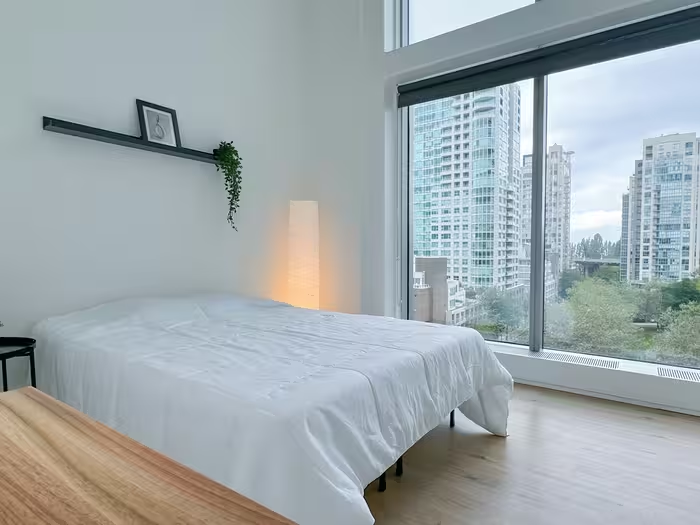
For many students, living downtown is the most straightforward and convenient option—especially in areas like Gastown and Yaletown.
This is typically where shared apartments are located, often within walking distance of the school.
Some of these areas are close to the waterfront and the Seawall, one of Vancouver’s most popular walking routes.
What Daily Life Feels Like
- You can typically walk to class in about 15–30 minutes
- Cafés, gyms, supermarkets, and the waterfront are close by
- Meeting classmates after school happens naturally
- Your daily routine is simple and efficient
What to Consider
- Living centrally usually comes at a higher cost
- The environment feels more international than “local Canada”
- Because many students live relatively close to the school, daily routines tend to be simpler and more consistent than in programs where longer commutes are common
Living Outside Downtown: A More Local, Residential Experience
Some students stay in residential areas outside the city center, often in neighborhoods like Renfrew or Killarney.
This is typically where student houses are located.
What Daily Life Feels Like
- Quieter surroundings with more space
- A more “local” Canadian atmosphere
- Slower pace compared to downtown
What to Consider
- A daily commute by public transport is required
- Social life requires more planning and initiative
- In practice, this option is often chosen for budget reasons rather than location preference. Living outside downtown is typically more affordable, which is why many students consider it. If budget is one of your main decision factors, our guide to the cost of studying English in Vancouver explains how tuition, accommodation, transport, and daily expenses usually fit together.

Living with a Host Family: Cultural Immersion Across Greater Vancouver
Homestays are located across Greater Vancouver, including areas like Burnaby and North Vancouver.
Your exact location can vary, but the experience tends to be consistent.
What Daily Life Feels Like
- Regular conversations in English during meals and daily routines
- A structured environment with family habits
- A deeper insight into Canadian culture
What to Consider
- Less independence compared to shared housing
- Commute times vary depending on location
If you’re unsure whether a homestay is the right accommodation for you, read our complete guide to living with a host family in the USA or Canada

What Students Often Underestimate About Living in Vancouver
Your location influences more than just your commute.
Students often underestimate:
- How much social life depends on proximity
Living downtown makes spontaneous plans easier - How routine affects progress
Shorter, simpler commutes make consistency easier - How environment shapes language exposure
Homestays often provide the most natural English practice
Each option has advantages—but they lead to very different experiences.
How Your Location Affects Your English Progress
Improving your English doesn’t only happen in the classroom.
Your environment influences:
- How often you speak English outside class
- How comfortable you feel starting conversations
- How quickly you build daily habits in English
For example:
- Downtown → more frequent interaction with other students
- Residential areas → more independence and self-driven practice
- Homestay → consistent exposure through daily communication
Combined with small classes and active speaking time, this creates steady, realistic progress. The length of your stay also matters. If you want to understand realistic timelines by level, course intensity, and study goal, read our guide to how long it takes to learn English in Vancouver.

Accommodation vs Location: What You Actually Control
Choosing your accommodation type is one decision.
Understanding how your location shapes your experience is another.
In practice:
- You choose how you want to live (shared apartment, student house, homestay)
- Your exact location depends on availability and housing type
So, Where Should You Stay in Vancouver as a Student?
There is no single “best” area.
It depends on your priorities:
- Convenience and social life → downtown Vancouver
- Lower cost and local experience → residential neighborhoods
- Maximum language immersion → homestay
In practice, there is no “wrong” option. All setups are designed to support your learning and daily life—you simply choose what matters most to you.
Why Location Matters More Than You Think
Where you live shapes your entire stay:
- Your daily rhythm
- Your confidence speaking English
- Your ability to connect with others
When your environment fits your goals, everything becomes easier—from your first conversations to the moment you realize you’re speaking English naturally.
FAQ
Where do most international students live in Vancouver?
Most international students live in downtown Vancouver, residential areas outside the center, or with host families across Greater Vancouver.
Is downtown Vancouver good for students?
Yes. Downtown Vancouver is convenient, walkable, and socially active, but it is usually more expensive than other areas.
How far is student housing from the city center?
Many students living outside downtown commute daily by public transport, depending on their housing location.
Is homestay better for learning English?
Homestays often provide the strongest daily English exposure through regular conversations and shared routines.
Key Takeaways
- You usually don’t choose a specific neighborhood directly
- Downtown = convenience and social life
- Residential areas = more local experience and lower cost
- Homestay = strongest cultural and language immersion
- Your location has a real impact on your experience and progress
Want to understand which option fits you best?
Explore your English courses in Vancouver
Or learn how to choose the right accommodation step by step: The Best Tips for Finding the Right Accommodation
Planning ahead helps you secure the most convenient options, especially during high-demand periods.








%20(Blog).avif)
%20(blog).avif)
.avif)
%20(1)%20(Blog).avif)
