


Yes — San Diego is one of the most effective cities in the USA to learn English. But not for the reasons many students initially expect.
It’s not just the location, the beach, or the lifestyle. What really determines your progress is how the city environment and your daily behavior work together.
Two students can take the same course in San Diego and achieve completely different results. The difference is not the city itself — it’s how they use it.
San Diego is a good place to learn English because it combines daily exposure, a social environment, and strong language schools. Students have frequent opportunities to speak English both in and outside the classroom, which supports faster progress.
Understanding what actually drives progress will help you decide whether San Diego is the right choice for you.
At a Glance: Learning English in San Diego
- San Diego offers daily opportunities to speak English
- A social environment makes interaction easier
- Small classes increase speaking time
- Accommodation and lifestyle influence consistency
- Progress depends on active participation
What Actually Determines Your Progress When Learning English Abroad
Before looking at San Diego specifically, it’s important to separate two factors that are often mixed.
City Factors (Environment)
- How often you are exposed to English in daily life
- How easy it is to start conversations
- How social and accessible the environment is
- Whether your daily routine naturally includes interaction
School Factors (Learning Structure)
- Class size
- Teaching style
- How much speaking time you get

In simple terms:
The city creates opportunities.
The school determines how much you practice.
Your progress depends on how you use both.
Why Students Learn English Faster in San Diego
What makes San Diego particularly effective is not just the environment, but how naturally it creates repeated, low-pressure speaking situations throughout the day.
A City Size That Makes Social Interaction Repeatable
San Diego is large enough to offer variety, but not overwhelming.
Students tend to:
- go to the same cafés
- use the same areas
- meet the same people again
This leads to a specific pattern:
You order coffee at the same place for a few days. The barista starts recognizing you, asks simple questions, and short conversations begin to feel natural.
These repeated interactions are where confidence builds — not in one moment, but over time.
San Diego's cultural diversity makes it one of the most enriching places to study.
A Social, Outdoor Lifestyle That Creates Natural Interaction
A significant part of daily life happens outside:
- Pacific Beach boardwalk
- Mission Beach
- cafés and shared spaces
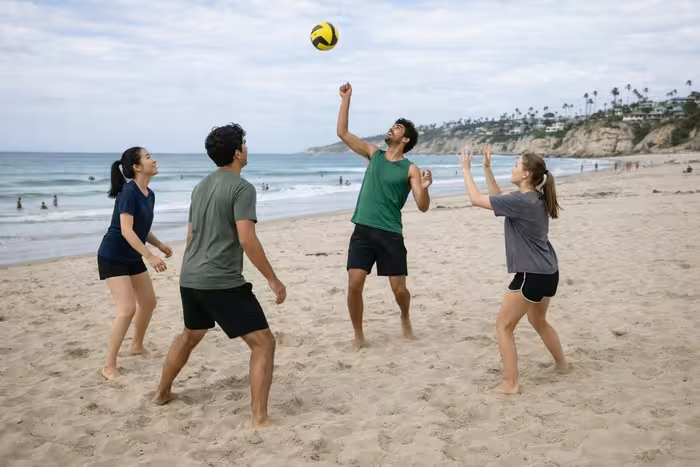
Instead of going home after class, many students stay out — sitting at the beach, walking along the boardwalk, or meeting classmates.
A typical afternoon might look like this:
You finish class, walk just a few minutes to the beach, and continue conversations naturally with classmates. Without planning it, you spend one or two hours speaking English in a relaxed setting.

A Communication Style That Makes Speaking Easier
Communication in California is typically:
- informal
- direct
- tolerant of mistakes
This has a practical effect.
Students often notice that:
- conversations start easily
- small talk is normal
- mistakes are not treated as a problem
Many arrive feeling unsure about speaking. After a few weeks, short conversations — ordering food, chatting briefly, reacting naturally — start to feel easier. This shift usually happens gradually through many small interactions.
Why Lifestyle Directly Affects Your Learning Progress
Lifestyle is often seen as a bonus. In reality, it directly affects how much you use English.
In San Diego:
- Mild climate → more time spent outside
- Safe, accessible environment → more exploration
- Coastal lifestyle → frequent social interaction
This creates a simple but important dynamic:
Students who stay active in daily life use English consistently.
Students who stay passive — even in the same city — don’t.
Learning English Outside the Classroom in San Diego
The fastest progress happens when what you learn in class is immediately used in real-life situations.
Everyday Micro-Situations That Build Fluency
Progress often comes from small, repeated moments:
- You order coffee and exchange a few words with the barista
- You ask for directions instead of checking your phone
- You make small talk while waiting in line
These interactions are short, but they happen daily. Over time, they reduce hesitation and make speaking more automatic.

Social Activities That Extend Speaking Time
Beyond daily situations, longer interactions matter:
- Beach meetups
- Group activities
- Informal gatherings
These are environments where conversations last longer and feel more natural. Many students reach a point where they stop translating and start reacting — this usually happens outside the classroom.
For many students, the moment they realize they can have a natural conversation without thinking too much is what makes the experience truly valuable.
Why Your School Still Matters (Even in the Right City)
The city creates opportunities — but the school determines how effectively you use them.
Small Classes vs. Passive Learning
In smaller, interactive classes:
- you speak regularly
- you receive direct feedback
- participation is expected
In larger classes:
- speaking time is limited
- learning becomes more passive
This difference has a direct impact on how quickly you improve.
City + School = Combined Effect
The strongest results happen when:
- the environment encourages speaking
- the class structure ensures active use of the language
At schools with small classes and a strong focus on speaking — such as CEL in Pacific Beach — students are able to combine structured learning with immediate real-world practice just minutes from the ocean.
Your Accommodation Influences How Much You Actually Speak English
Where you live shapes your daily behavior — and that directly affects your progress.
Living With Others vs. Staying Isolated
In shared accommodation:
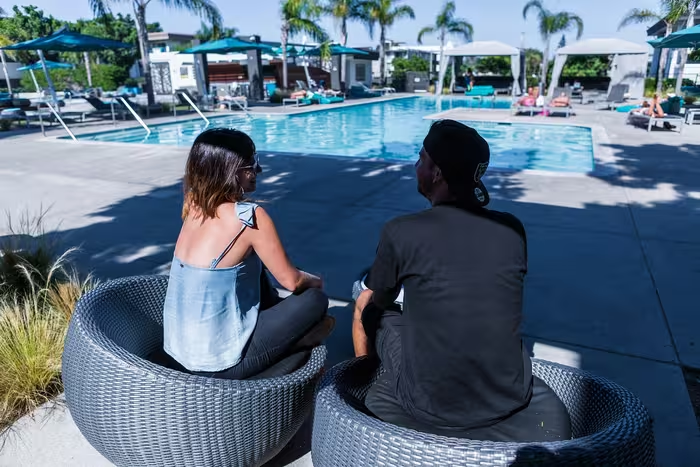
- conversations happen naturally in the kitchen or living area
- you continue speaking after class without planning it
- social routines develop quickly
In more isolated living situations:
- interaction is limited
- English is used mainly during lessons
- speaking progress can slow down
Proximity and Daily Routine
Location matters more than many expect.
If you live in a social area, a typical day might include:
- finishing class and walking straight into an active environment
- meeting classmates spontaneously
- staying out instead of going home
In locations close to the beach — like Pacific Beach — this effect becomes even stronger. Being just a short walk from the ocean creates daily opportunities to stay active, meet people, and continue speaking English after class.
If you live far away:
- commuting takes time and energy
- participation drops
- interaction decreases
The easier it is to stay engaged, the more you will actually use English.
What Many Students Realize After a Few Weeks
At the beginning, most students focus on:
- the teacher
- the course
- the classroom
After a few weeks, their perspective shifts.
They realize that progress depends heavily on:
- daily interaction
- consistency
- how often they actively use English
Students who improve fastest usually:
- speak every day
- build simple routines in English
- accept making mistakes early
San Diego vs. Other Popular Cities for Learning English
Choosing the right city often comes down to how easily it supports daily interaction.
If you're comparing different destinations, looking at how daily life actually feels in each city can make the decision much clearer. You can also explore more detailed comparisons such as:
San Diego vs. Los Angeles
Los Angeles is:
- larger and more spread out
- more dependent on transport
- less consistent in daily routines
San Diego:
- is more compact
- allows easier structure in daily life
- makes repeated interaction more likely
San Diego vs. New York
New York is:
- fast-paced
- highly transactional
- more intense
San Diego:
- allows more relaxed interaction
- creates more space for longer conversations
- lowers the barrier to speaking
San Diego vs. Hawaii
Hawaii is:
- more isolated
- less structured as a study environment
- strongly tourism-oriented
San Diego:
- combines lifestyle with a structured learning environment
- offers more consistent exposure to everyday English
- supports regular interaction beyond tourism contexts
Who San Diego Is (and Is Not) Ideal For
Ideal for students who:
- want to improve speaking confidence
- prefer active participation
- enjoy social and outdoor environments
- are willing to engage daily
Less ideal for students who:
- prefer passive learning
- avoid interaction
- want a purely academic environment
Frequently Asked Questions
Is San Diego a good place to learn English?
Yes. It offers a combination of structured learning and daily interaction that supports consistent progress — especially for speaking skills.
How long should I study English in San Diego?
- 2–4 weeks: initial confidence
- 8–12 weeks: clear improvement
- 12+ weeks: strong and lasting progress
Is San Diego better than Los Angeles for learning English?
For many students, yes. The more compact structure and easier social integration often lead to more consistent speaking practice.
Can beginners learn English in San Diego?
Yes. Beginners benefit from the constant exposure to English in daily life, combined with structured classes that build a strong foundation.
Is San Diego expensive for students?
San Diego is not a low-cost destination, but many students find it more affordable than cities like New York or San Francisco, especially considering the lifestyle and overall experience.
Choosing the Right School in San Diego
When choosing where to learn English in San Diego, it’s worth looking beyond the location itself.
Class size, accommodation, and how much you are encouraged to speak daily will ultimately determine how much progress you make.
In practice, schools that combine:
- small, interactive classes
- strong focus on speaking
- and a location integrated into daily student life
tend to create a more effective learning experience.
In areas like Pacific Beach, where students can walk from class to the beach in just a few minutes, this connection between school and daily life becomes particularly strong. It allows students to continue using English immediately after class, without interruption.

Key Takeaways
- San Diego works well because it naturally creates daily speaking opportunities
- The fastest progress happens when classroom learning is used in real life
- Lifestyle and accommodation influence how much you actually practice
- Small, interactive classes significantly improve results
- Consistency and daily interaction are the main drivers of progress












.avif)
.avif)