


On this page
Overview
CEFR Levels
What Affects Progress
Program Lengths
Electives
Duration vs. Goal
Short Courses
FAQ
From Our Blog
Overview
What's the right course duration to learn English in Vancouver?
A language course in Vancouver can last from a few weeks to several months. The right duration depends on your starting level, your academic or professional goals, and how much measurable progress you want to achieve.


10 Weeks per CEFR Level
On average, students require 10 weeks to complete one CEFR level (for example, from B1 to B2). Shorter stays improve fluency and confidence, while programs of 12 weeks or longer allow for structured academic progression.

Small CEFR-Aligned Classes
At CEL Vancouver, students study English in small classes (average 7 students, maximum 12), following clearly defined CEFR benchmarks (A1–C2). Progress is structured, measurable, and aligned with international standards.
What Shapes Your Decision
Beyond these averages, the right program length for you is shaped by where you're starting, where you want to go, and how you plan to use English afterwards.
Your Ideal Duration Depends On:

Your current English level

Your target level

Whether you plan to take IELTS

Whether you want to develop career-relevant skills

Your long-term academic or professional plans
For full program details, visit our Study English in Vancouver page. Still deciding between cities? Compare your options in our Vancouver vs. Toronto guide.
CEFR Levels
How Long Does It Take to Move Up One CEFR Level?
CEL Vancouver classes average 7 students (maximum 12), following clearly defined CEFR benchmarks — so your progress is structured, measurable, and internationally recognised.
A1
Beginner
A few words, basic phrases. Starting from zero or close to it.
Approx
8 weeks
A2
Elementary
Simple conversations, ordering food, following basic instructions.
Approx
9 weeks
B1
Intermediate
Real conversations, talk about your life and plans. University entry starts here.
Approx.
10 weeks
B2
Upper-Intermediate
Fluent in most situations. Can argue, persuade, understand complex topics.
Approx
10 weeks
C1
Advanced
Near-native fluency. Professional or academic use. IELTS 7+ territory.
Approx
11 weeks
On average, students need approx. 10 weeks of consistent study to complete one CEFR level. Progress depends on regular attendance, active participation, and using English outside the classroom — students who embrace Vancouver’s daily life progress noticeably faster.
What Affects Progress
What Affects How Fast Your English Improves?
Your progress during a language course depends on several factors, not just the number of weeks you study. Studying in a city like Vancouver supports faster improvement because students use English both inside and outside the classroom every day.
Your Starting Level
Beginners often progress faster in the first stages, while advanced learners refine more complex skills.

Course Intensity
Full-time programs accelerate progress compared to part-time courses.

Daily Immersion
Using English outside the classroom with classmates and locals reinforces learning.

Personal Motivation
Students who actively participate in conversations, activities, and group work usually progress faster.
Study Duration
What Happens in 4, 8, 12 or 20+ Weeks?
Your ideal program length depends on your current level, your target level, whether you plan to take IELTS, and your long-term academic or professional goals.
What Happens in
4 Weeks?
Quick Start
Short-term immersion
Refresh existing skills
Improve fluency & confidence
Academic preparation before a longer stay
Usually improves speaking flow and vocabulary, but typically not enough to complete a full CEFR level.
What Happens in
8 Weeks?
Foundation
Noticeable fluency gain
Stronger grammar control
Improved listening comprehension
Possible full level completion
Students at upper-intermediate or advanced levels may experience particularly visible progress during this timeframe.
What Happens in
12 Weeks?
Most Popular
The Sweet Spot
Full CEFR level advancement
Stable learning routines
Deep English immersion
Strong return on educational investment
The minimum for meaningful transformation for most students.
What Happens in
20+ Weeks?
Full Immersion
Advance multiple CEFR levels
Prepare for IELTS or Cambridge
Build professional competencies
Prepare for university pathways
Students planning long-term academic or career goals often choose programs of 20 weeks or more to ensure sustainable language development.
Cost tip: Longer stays also benefit from reduced weekly tuition rates, making extended study more cost-efficient per week.
See how weekly rates drop with longer courses
Electives
Combining General English with Electives
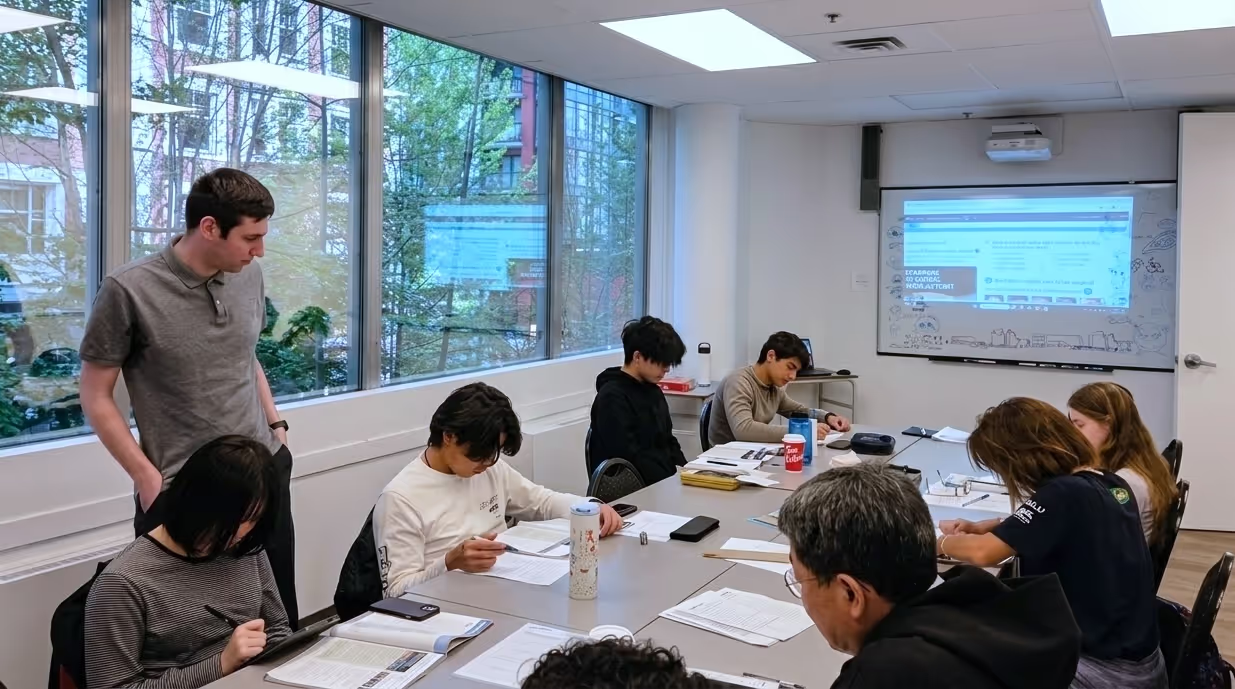
Many students first strengthen their core skills through General English and then transition into a focused elective pathway.
Career Development Skills
Improve your English while building practical career skills. Topics include project management, AI fundamentals, strategic negotiation, presentations, and job interview preparation.
IELTS Exam Preparation
Intensive preparation for all four IELTS sections — reading, writing, listening, and speaking — with exam strategies, practice tests, and personalized feedback.
Cambridge CAE Exam Preparation
Preparation for the Cambridge C1 Advanced (CAE) exam — develops academic writing, reading comprehension, listening, and speaking skills required for the exam — including exam strategies, practice tests, and personalized feedback.
General English + Elective: A Sample Pathway
Students therefore develop both language proficiency and practical competencies that are directly transferable to academic and professional environments. A common pathway to study English in Vancouver is:
8–16 weeks
General English
Core language building across all levels A1–C2

Up to 8 weeks
General + Elective
Career Development electives or IELTS preparation

Completion
Certificate + Next Step
Internationally recognised completion
This structure combines measurable language progression with real-world skill development.
Your Goals
Choosing the Right Course Length for Your Goals
Your program length should match your objective. Use this to find the right fit:
Improve fluency and speaking confidence

4–8 weeks
Complete one CEFR level
~10 weeks
Prepare for IELTS or Cambridge exams
8–20 weeks
Depends on starting level
Develop professional communication and career skills
12-24 Weeks
Often combined with other programs
Prepare for university or long-term international study
20+ weeks
Depends on current level
Short Courses
What Can You Achieve in a Short English Course?
Short programs (2–4 weeks) can still be very valuable for many students. They allow you to experience daily life in an English-speaking environment, build speaking confidence, and explore Vancouver while improving your English.
However, students seeking measurable academic progress or CEFR level advancement usually benefit from programs of 10 weeks or longer, which allow for deeper immersion and stronger learning outcomes.
10+ weeks
1–4 weeks
Measurable academic progress
Cultural immersion and real-life experience
Often enough time to progress one CEFR level
Building speaking confidence quickly
Preparation for IELTS or academic study
Exploring Vancouver before committing longer
Deeper immersion in English
Refreshing skills you already have
Stronger long-term language development
Exposure to an English-speaking environment
Many international students in Vancouver choose 8–12 weeks, which offers a strong balance between measurable progress and time to enjoy the experience abroad.
Students seeking measurable academic advancement and CEFR progression should plan for at least 10 weeks. Longer stays allow for deeper integration and stronger long-term results.
FAQ
Frequently Asked Questions
How many weeks do I need to improve my English?
On average, students need approx. 10 weeks to complete one CEFR level. Shorter stays improve fluency and confidence but typically won’t result in a full level progression. That said, even 4 weeks produces real, noticeable gains — especially in speaking and listening.
Is 12 weeks enough to see real progress?
Yes. Twelve weeks typically allows students to complete one CEFR level and achieve measurable improvement — especially with consistent attendance and active participation in and outside class. It's the most popular length for a reason.
Can I extend my program once I'm already in Vancouver?
Yes — and it's very common. Many students arrive thinking 8 weeks and extend to 12 or more after settling in. Extensions are processed in-school, usually within a day.
Can I study English in Vancouver for only 4 weeks?
Yes. Four weeks can significantly improve speaking confidence and vocabulary, particularly for intermediate or advanced learners. However, it is usually not enough to complete a full CEFR level.
How long should I prepare for IELTS?
IELTS preparation courses typically run up to 8 weeks. Many students start with General English and then transition into the IELTS preparation.
Does studying longer reduce the weekly tuition cost?
Yes. Tuition decreases at 13 weeks and again at 20 weeks, making longer programs more cost-efficient per week. If you're planning 12 weeks, it's worth considering whether one extra week both saves money and gives you more time to consolidate your level progress.

Not sure how long you need?
Tell us your level and what you want to achieve. We’ll find the right fit.
Timeline and Goals
How Long Does It Take to Learn English in Vancouver?
Most international students studying English in Vancouver advance one Common European Framework of Reference (CEFR) level every 10 weeks. This baseline assumes full-time enrollment and consistent daily practice. At our campus in Vancouver, British Columbia, we keep class sizes small. You share the room with an average of 7 students, and never more than 12. This structure allows our certified teachers to provide direct feedback on your pronunciation and grammar. As a recognized Designated Learning Institution (DLI #O19395677113), CEL tracks your progress using strict international benchmarks from A1 beginner to C2 mastery. Moving from a B1 intermediate to a B2 upper-intermediate level generally requires about 250 hours of guided instruction. Your exact timeline depends heavily on how much you interact with locals outside of class hours. Choosing an immersive environment accelerates your learning curve significantly. Students who actively participate in weekend activities or join local conversation clubs routinely reach their target fluency faster than those who only speak English during lessons.
Short programs ranging from one to four weeks provide a helpful introduction to the city. They build immediate speaking confidence and refresh existing vocabulary. You will navigate coffee shops and public transit with ease. However, meaningful academic progression takes time. If your goal involves taking the International English Language Testing System (IELTS) exam, you should expect to spend at least 12 to 20 weeks preparing. Many professionals studying English in Vancouver combine morning classes with afternoon excursions to maximize their exposure to authentic Canadian accents.
What happens during an eight-week language program?
An eight-week duration acts as a solid foundation for noticeable fluency gains. Students arriving at an A2 or B1 level often experience a visible improvement in their daily communication skills within this timeframe. You develop stronger grammar control and improve your listening comprehension. By the end of two months, you might complete a full level advancement. The key is consistent attendance. Your progress depends directly on how intensely you practice reading and writing alongside spoken conversation. Exploring the city helps. Review our surprises of living in Vancouver as a student post to see how daily life reinforces classroom theory. Practicing your English in Vancouver neighborhoods like Kitsilano or Gastown forces you to use new phrasing naturally.
Why do 12 weeks represent the sweet spot?
Most educators consider a 12-week stay the minimum duration for a complete language overhaul. This length allows you to fully integrate into a stable learning routine. A three-month commitment provides the deep immersion necessary to shift your brain into thinking in a new language. You advance at least one full level. This duration offers a strong return on your educational investment. Longer stays also reduce your weekly tuition costs. If you are applying for a Canadian study permit, you may also need a Guaranteed Investment Certificate (GIC) to prove your financial support. If you need help calculating your budget, check our tuition breakdown to plan your finances effectively. Many students pursuing English in Vancouver use this 12-week block as a springboard for further academic pursuits.
Do beginners learn faster than advanced students?
Yes. Starting from zero feels incredibly fast. An absolute beginner at the A1 stage can pick up basic vocabulary and simple sentence structures in just four weeks. Going from no knowledge to ordering coffee successfully feels like a massive leap. You see immediate results. Once you reach a B2 level, the vocabulary becomes highly specific and the grammar nuances get trickier. Moving from upper-intermediate to advanced proficiency takes longer because you are refining complex arguments rather than exchanging basic information. International students often feel frustrated during this stage, but the slow refinement is completely normal. Consistent exposure to English in Vancouver helps push past this intermediate plateau.
How do electives change your learning timeline?
After establishing a strong baseline in general classes, many students transition into specialized electives. This approach does not necessarily lengthen your stay. It simply shifts the focus of your final weeks. You can spend your first 16 weeks building core language skills across all levels. Then, you might dedicate your final month to career development topics like project management or interview preparation. Adding focused modules ensures you return home with practical competencies. Our career development courses integrate these professional skills directly into your daily schedule. Building a specialized vocabulary makes you more competitive in the global job market.
How much time is needed for exam preparation?
Earning a high score on the Cambridge English: Advanced (CAE) requires dedicated strategy practice. Advanced learners usually spend 8 to 12 weeks purely on exam techniques. You must master the specific reading formats and strict time limits of the test. Taking practice exams under realistic conditions is essential. We provide personalized feedback on every mock test. If you are aiming for university admission, you might need a longer pathway. Many students spend 20 weeks or more bridging the gap between general fluency and academic readiness. You can review our undergraduate pathway programs to understand the required entry benchmarks for North American institutions.
Does your living situation accelerate your progress?
Where you sleep influences how fast you learn. Securing an immersive living situation forces you to communicate naturally during breakfast and dinner. Students who live with local hosts report higher confidence in casual settings. Practicing idioms and slang over a shared meal builds a type of fluency that textbooks cannot replicate. Securing comfortable CEL student housing is just as critical as selecting the right course intensity. You can also compare the overall experience of learning in Canada versus studying at our San Diego language school or taking Los Angeles English courses in California. Every location offers a distinct cultural backdrop for your language development. Commission on English Language Program Accreditation (CEA) standards govern our US schools, ensuring quality matches what you experience in Canada.
%20(Blog).avif)






.avif)
%20Students%20in%20Granville%20(Blog).avif)
.avif)
.avif)

.avif)
.avif)
.avif)



%25252520(84)%25252520(blog).avif)


.avif)



%20-%20Students%20at%20the%20sea%20(Blog).avif)