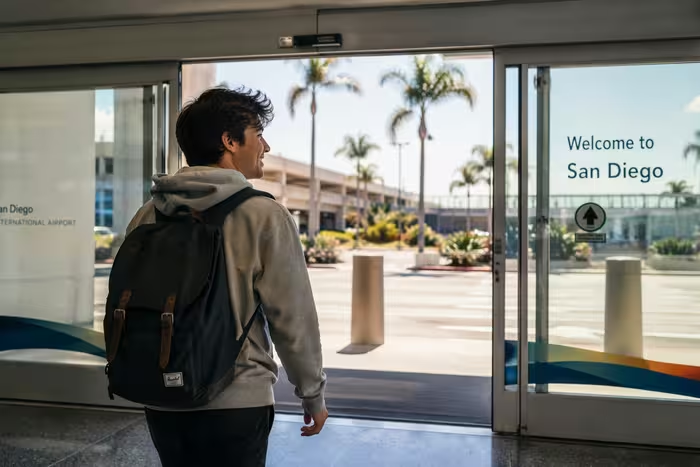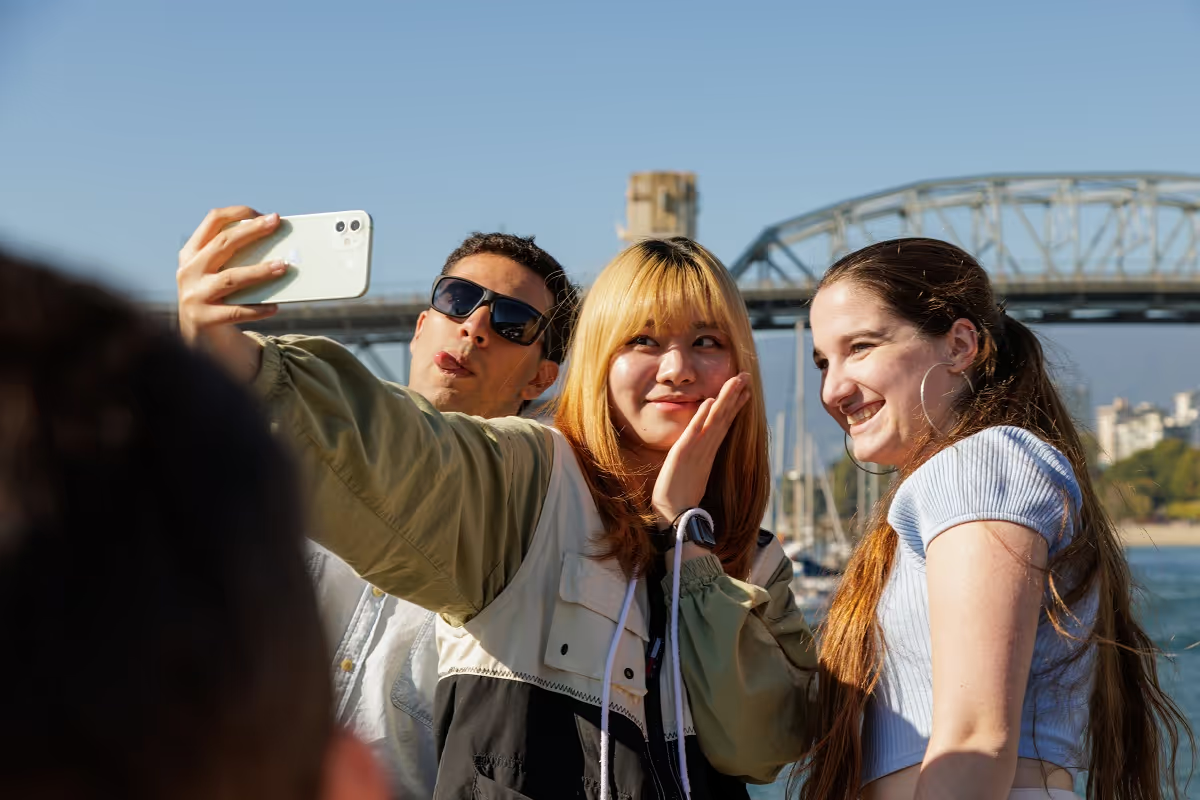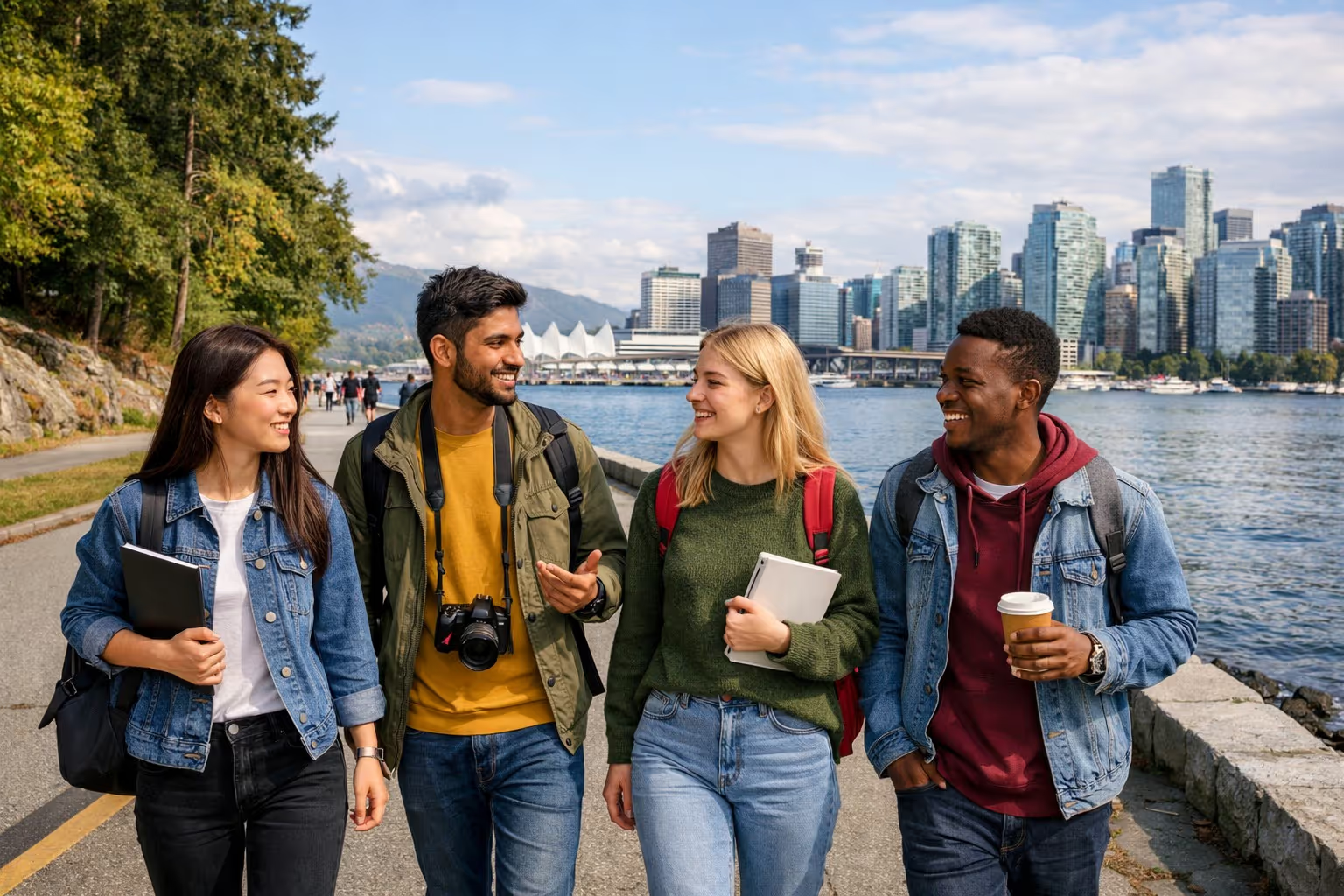
Most international students arrive in Vancouver with a mental picture built from Google Images and a few YouTube vlogs: mountains, ocean, a bit of rain, a lot of glass towers. The picture isn't wrong. It's just incomplete.
Students ask us the same questions before booking — Will I stand out? Is the rain really that bad? Will I actually speak English outside class? Once they're living in Vancouver as a student, the answers consistently surprise them. Below are five of the most common surprises, drawn from what students from Brazil, Japan, Korea, Switzerland, Spain, Saudi Arabia, and elsewhere notice during their first weeks on the ground in Metro Vancouver, British Columbia.
The 5 surprises at a glance
- You won't stand out — Metro Vancouver is one of the most ethnically diverse cities in North America.
- Strangers will start small conversations with you, and they actually mean it.
- It rains often, but the rain is usually light, and summers are genuinely dry.
- Nature isn't a weekend trip. It's Tuesday afternoon.
- You'll speak English in places you didn't expect to — not just in class.
1. You won't be the only one who doesn't "look Canadian"
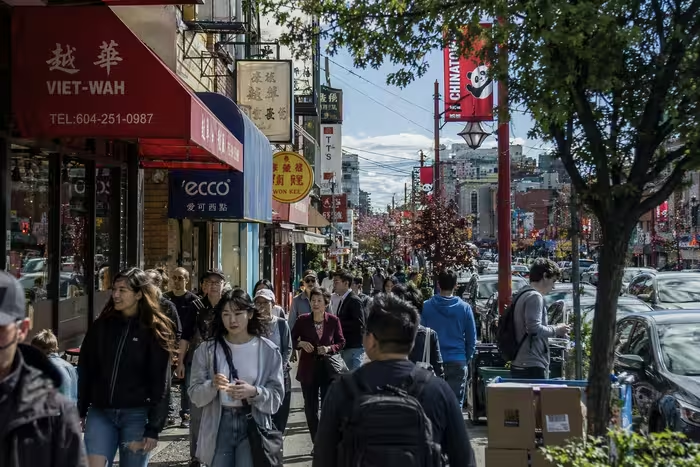
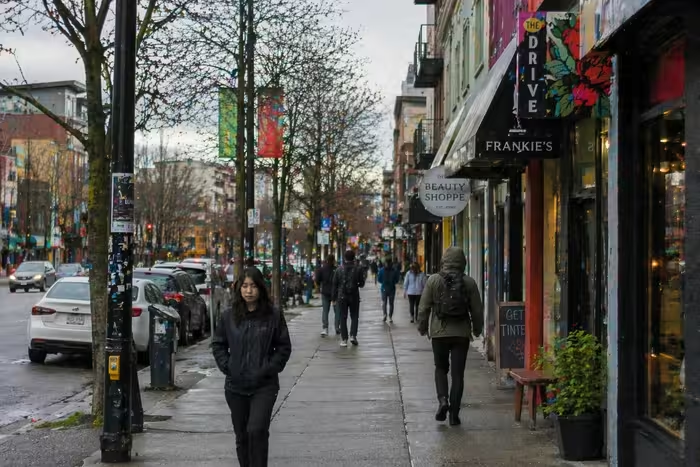
In 2021, 54% of the people in Metro Vancouver, British Columbia, identified as a visible minority, up from 49% in 2016. More than four in ten residents of Vancouver city were born outside Canada. For many international students, especially those from Asia, Latin America, or the Middle East, this changes the experience before the first week is over.
There is no visible "foreigner class" in Vancouver. On any given SkyTrain car you'll hear Mandarin, Cantonese, Punjabi, Tagalog, Spanish, Korean, Japanese, Farsi, and English, often in the same five minutes. Neighbourhoods like Richmond, East Vancouver, and parts of downtown are shaped by generations of immigration rather than recent arrivals.
For students who arrive braced for stares or for constant "where are you from?" questions, the absence is striking. You blend in by default. Students from Europe often experience this differently — less as relief, more as a shift in what a "Canadian city" looks like compared to the images they had in mind.
The surprise isn't that Vancouver is diverse. Most students read that in a brochure before booking. The surprise is how ordinary it feels once you're inside it.
2. Strangers will talk to you, and they actually mean it
The first time a barista asks how your day is going — and actually waits for the answer — feels strange at first. For students from Japan, Korea, Switzerland, or much of Europe, where strangers generally don't interact, Canadian small talk takes some getting used to.
It happens everywhere. Bus drivers say "good morning." Dog owners at Spanish Banks or Kitsilano Beach will talk to you because you're looking at their dog. Neighbours in the elevator comment on the weather. Someone in the grocery queue will ask what you're cooking.
One thing worth knowing early: this friendliness is wide, but it's not always deep. Canadians are genuinely warm in passing interactions, but close friendships tend to form more slowly than in some cultures — often through shared activities (a climbing gym, a pottery class, a weekly five-a-side soccer game) rather than through small talk alone. Students who arrive expecting the first friendly chat to become a friendship by next week sometimes feel disappointed around month two. Students who treat these small interactions as what they are — low-pressure daily speaking practice with native speakers — tend to leave Vancouver with both better English and a handful of real friendships.
A typical scene: a Tuesday morning at a café near Melville and Bute, a couple of blocks from the waterfront. You order an oat flat white. The person behind the counter asks if you watched the Canucks game last night, and you smile and say no even though you have no idea what the Canucks are. By the time you've paid for your coffee you've had a two-minute conversation that no textbook could have scripted. This happens several times a week once you start noticing it.
3. Is Vancouver really that rainy?
Vancouver is a rainy city. The airport records around 169 rainy days per year, and the city itself often sees more. That's the honest number, and it's worth knowing before you arrive.
What the number doesn't capture is the kind of rain. Vancouver rain is usually light — a steady drizzle or mist rather than the heavy downpours common in parts of Asia or Latin America. Locals don't carry umbrellas. They wear waterproof shells and keep walking. Within a few weeks most students stop carrying umbrellas too, which is the moment you realise you've quietly adjusted.
The other thing the reputation misses: summer. July is historically the driest month in Vancouver, and Vancouver International Airport has recorded entire Julys with no measurable rainfall. From late June through August, the city flips — long, dry, warm days, beach evenings, outdoor patios. If you're coming in the summer months, the rain you were warned about may not appear at all.
Climate is also one of the biggest factors students compare when choosing between Canada's major study destinations. If you're still deciding between the west and east coast, our guide to Vancouver vs. Toronto for English students compares weather, lifestyle, costs, and student experience in more detail.
What to pack: one good waterproof jacket (worth the investment), one pair of shoes you don't mind getting wet, and less anxiety than you're currently carrying about the weather. The rain is real, but it's the kind of rain you live alongside rather than hide from.
4. Nature isn't a weekend trip — it's Tuesday afternoon
Most students arrive assuming that "mountains and ocean" means weekend planning. A rental car, a packed bag, an early start. In Vancouver it often means finishing class at lunchtime and being somewhere green an hour later.
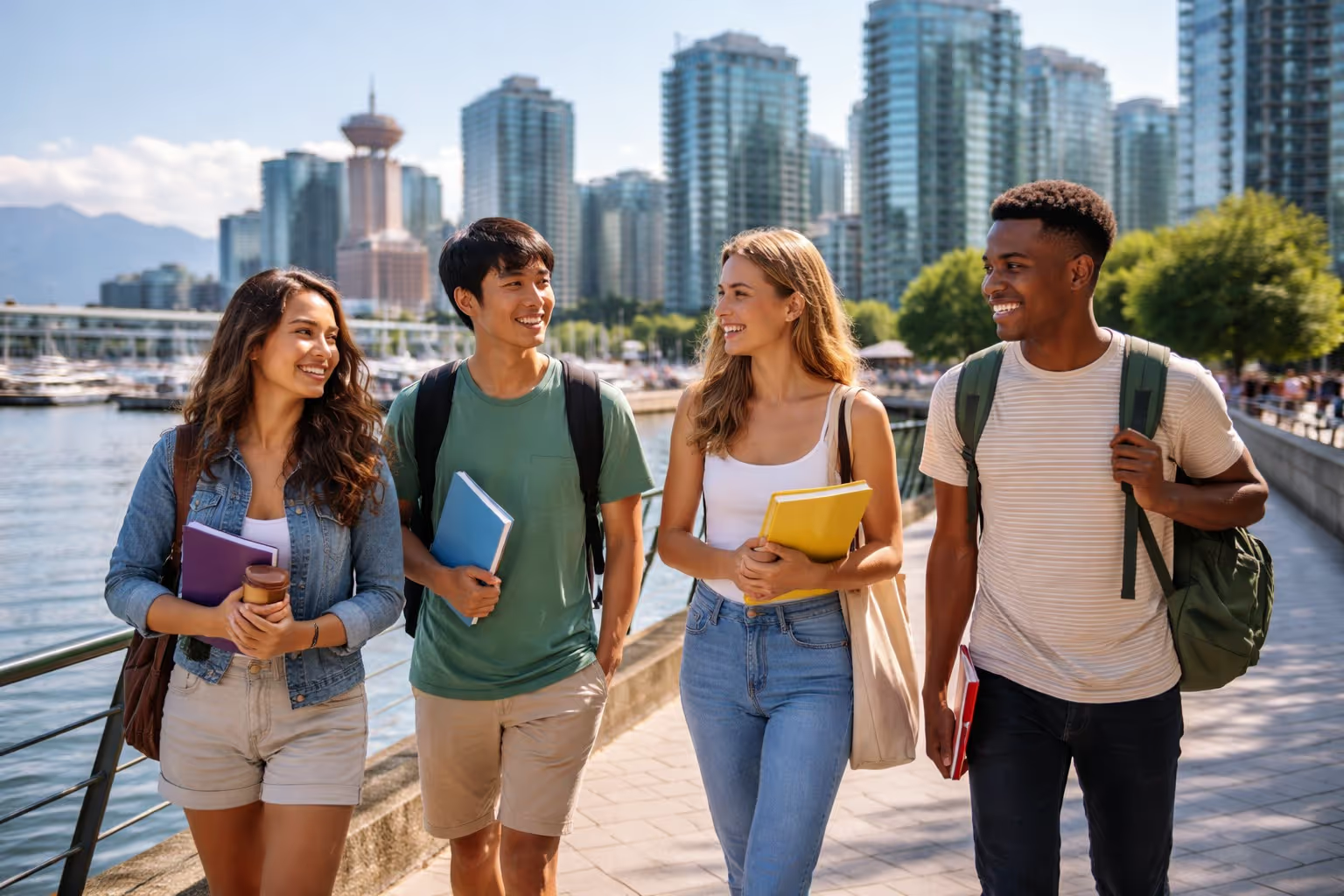
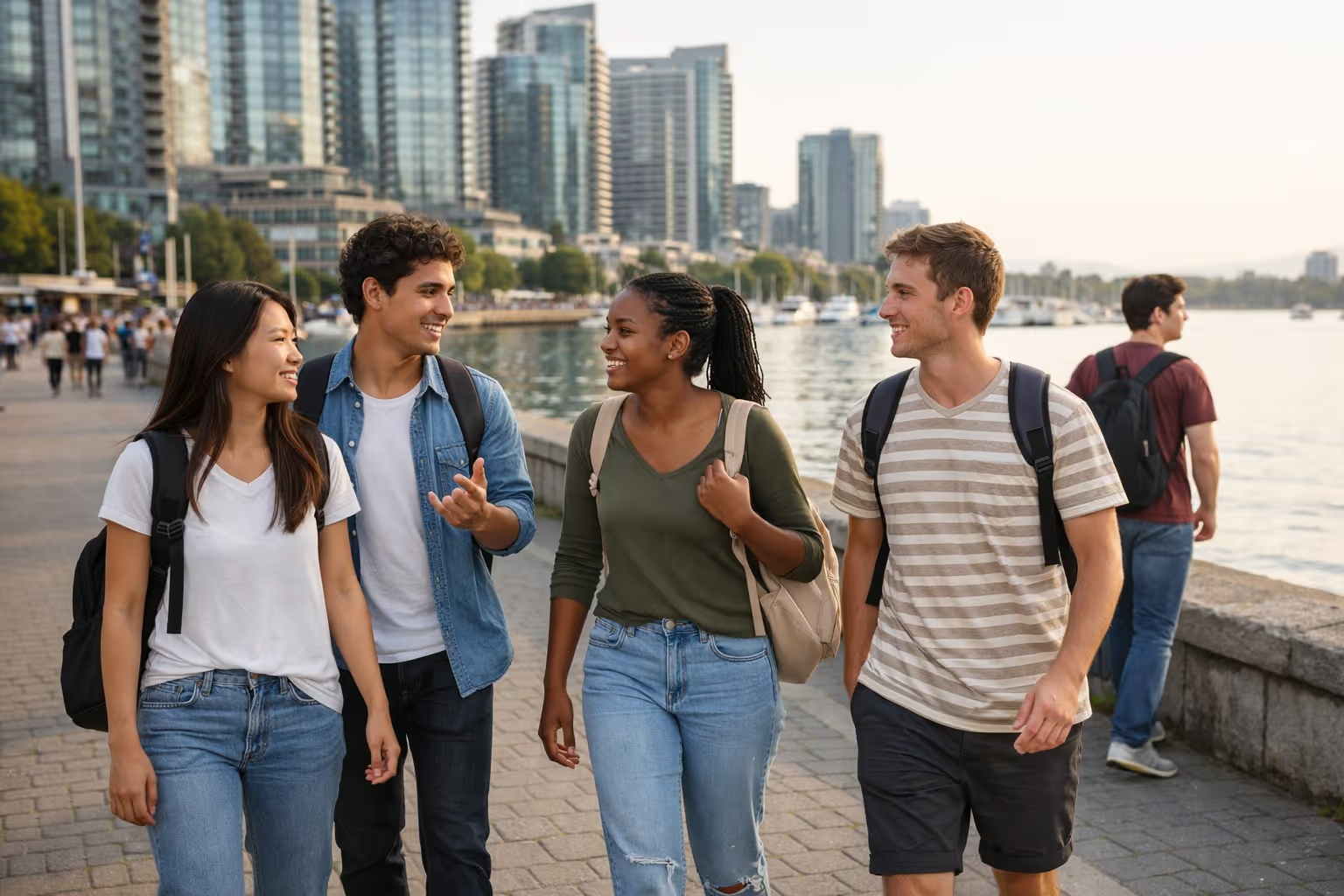
Stanley Park sits at the edge of downtown. Kitsilano Beach is a SkyTrain-and-bus ride away. The Seawall — the world's longest uninterrupted waterfront path — wraps around the downtown peninsula, and a section of it runs straight through Coal Harbour. The North Shore mountains (Grouse, Cypress, Mount Seymour) are roughly 20 to 30 minutes by car or bus from the city centre. None of these require a weekend.
This changes what "after class" can mean. A walk along the Seawall before sunset, a beach picnic at English Bay, a short hike on the Grouse Grind on a Wednesday — all of it fits inside a normal study week.
If you want a full picture of what's actually doable in a student afternoon, we covered it in more depth in our guide to outdoor activities after class in Vancouver.
%25252520(84)%25252520(blog).avif)
5. Will you actually speak English outside class in Vancouver?
A common concern before booking: "If I go to a city full of international students, will I actually practise with native speakers, or just with other learners?"
It's a fair question, and the answer in Vancouver is more reassuring than most students expect. Around half of Vancouver residents speak English as a first language, but the number of people who speak English comfortably is much higher — many residents who grew up speaking another language at home have lived in Canada for years or decades and speak English fluently. In practice, most of the people you'll interact with day to day — at shops, on transit, at the gym, in cafés — will speak excellent English whether it's their first language or not.
Canadian daily life also has low-stakes English conversation built into it at every turn. The barista who asks about your day. The bus driver's good morning. The dog owner at Third Beach. The cashier at the grocery store who comments on the weather. The neighbour in your building's elevator. These interactions are short, usually friendly, and — because nobody is grading you — low pressure. Over four to twelve weeks, they add up to more real spoken English than most students get from any single class hour.
One honest detail worth knowing: not every neighbourhood is equally English-dominant. In Richmond you'll hear more Mandarin and Cantonese than English on the street. In parts of East Vancouver, Punjabi is common. In the West End and downtown, English dominates. This isn't a problem — it's a feature of a multicultural city — but it's worth considering when choosing where to live. If native-speaker exposure is one of your main goals, housing closer to downtown, the West End, or Kitsilano tends to give you more daily English than further-out neighbourhoods.
What living in Vancouver as a student actually looks like
The thread through all five surprises is the same: Vancouver is a city that's easier to belong to than students expect, and easier to practise English in than the numbers suggest. The picture you formed before arriving will shift within your first month — usually in your favour. This is what Vancouver student life actually looks like once the first-week novelty wears off.
For students coming to CEL, there's one more layer. Our Vancouver campus sits in Coal Harbour, a quiet, modern neighbourhood on the downtown waterfront. The Seawall is a five-minute walk from the front door, and Stanley Park is about twenty minutes on foot. Classes average seven students and are capped at twelve, which means most weeks you'll share a classroom with people from five or more countries — a small international version of the city outside. CEL is accredited by Languages Canada and holds EQA (Education Quality Assurance) status from the Province of British Columbia, which signals consistent standards across the Canadian ESL sector.
If you're thinking about a longer stay, our piece on how Vancouver shapes student growth goes deeper on the side of the experience that only shows up after a few months.
You can read more about English courses in Vancouver here.

Frequently asked questions
Is Vancouver a good city for international students?
Yes, for two specific reasons that go beyond the usual marketing language. First, Metro Vancouver is one of North America's most ethnically diverse cities — 54.5% of residents identified as a visible minority in the 2021 census — which makes the day-to-day experience easier for students from Asia, Latin America, and the Middle East. Second, access to nature, reliable public transit, and a high concentration of language schools mean the practical side of studying English works smoothly. Housing is the main challenge, and it's worth starting your search early.
Is Vancouver really that rainy?
Vancouver does get more rainy days than most Canadian cities — around 169 per year at the airport and more in the city itself. But the rain is usually light drizzle rather than heavy downpours, and July and August are genuinely dry, sometimes with little to no measurable rainfall. Most students adapt within a few weeks and stop carrying umbrellas, as locals rarely do.
Will I actually meet Canadians in Vancouver, or just other international students?
You'll meet both. Around half of Vancouver residents speak English as a first language, and many more speak it fluently as a second language after living in Canada for years or decades. Canadian daily life has a lot of low-stakes English interaction built in — with baristas, bus drivers, neighbours, dog owners at the park. Close friendships with Canadians tend to form through shared activities (sports, classes, volunteering) rather than chance conversations, so joining something outside your course helps a lot.
Is living in Vancouver expensive for international students?
It depends heavily on where you're coming from. Vancouver is expensive by Canadian standards but may feel similar or cheaper to students from Zurich, Tokyo, or London. Housing is the largest cost and the most variable. Housing is usually the largest expense, especially in central neighbourhoods close to downtown. For a detailed breakdown of tuition, accommodation, transport, and realistic student budgets, see our guide to the cost of studying English in Vancouver.
How long should I study in Vancouver to see real progress in my English?
Most students see a measurable jump of one CEFR level (for example, B1 to B2) in around 10 to 12 weeks of full-time study, though this varies with starting level and daily practice. Shorter stays of 4 to 8 weeks are useful for confidence, speaking fluency, and specific skills, but less likely to move you a full level. Most students see faster progress when daily English exposure outside class becomes part of their routine. We explain typical timelines, study paths, and what different course lengths realistically achieve in our guide to how long it takes to learn English in Vancouver.





.avif)