


From San Diego, you can reach a desert national park, a mountain lake, a different country, or one of the world's most famous cities — all within three hours or less. Few study-abroad cities give you that many options so close by.
All prices in this guide are in US dollars.
For international students studying English in San Diego, weekend trips are often the highlight of their stay. They're also where English practice becomes most natural — planning routes, splitting costs, ordering food, and navigating new places together with classmates from different countries.
At CEL San Diego, classes run Monday to Friday, leaving weekends completely free. With small classes (average 7 students, maximum 12), students get to know each other quickly — which is how most weekend trips start.
This guide covers the best weekend trips from San Diego that students actually take, with practical details on transport, budget, and what to know as an international visitor.
Quick Overview: Best Weekend Trips from San Diego
| Destination | Distance | Travel time | Best transport option | Budget estimate (per person) |
|---|---|---|---|---|
| La Jolla & Torrey Pines | 20 km | 30 min | Bus / rideshare | $10–30 |
| Tijuana, Mexico | 25 km | 30 min | Trolley to border, then walk | $30–80 |
| Ensenada, Mexico | 110 km south of border | 1.5 hrs from Tijuana | Rental car / bus from Tijuana | $80–150 |
| Los Angeles & Santa Monica | 190 km | 2–2.5 hrs | Amtrak Pacific Surfliner / rental car | $100–250 |
| Palm Springs | 225 km | 2.5 hrs | Rental car | $120–250 |
| Joshua Tree National Park | 260 km | 3 hrs | Rental car | $120–200 |
| Big Bear Lake | 260 km | 3 hrs | Rental car | $120–250 |
| Las Vegas | 530 km | 5 hrs / 1 hr flight | Budget flight or rental car | $150–350 |
Costs are approximate and assume sharing transport and accommodation with 2-3 classmates. Rental car estimates include insurance and taxes (see details below).
How to Plan a Weekend Trip from San Diego
Getting around without a car
Most international students in San Diego don't have their own car. That's not a problem for daily life — Pacific Beach is walkable and well-connected by bus — but it does shape how you plan weekend trips.
CEL San Diego is located in Pacific Beach, with easy access to the I-5 freeway and the city's bus and trolley network. Most destinations in this guide are reachable from here.
Your main options:
Public transport: The Amtrak Pacific Surfliner runs along the coast from San Diego to Los Angeles (and beyond). The San Diego Trolley connects downtown to the Mexican border. Both are affordable and don't require a driving licence.
Rental cars: This is how most student groups handle trips to Joshua Tree, Palm Springs, or Big Bear. Economy car rates in San Diego typically start around $45-65/day before taxes and fees — but the final price is usually higher than the advertised rate.
- Base rate: $45-65/day for an economy car
- Taxes and fees: San Diego charges approximately 35% on top of the base rate
- Young driver surcharge: Most agencies charge $10-20/day extra for renters under 25
- Insurance: Roughly $15-30/day (check whether your credit card or travel insurance from home already covers rental car damage — this can save significant money)
- What you need: A valid driving licence from your home country (an international driving permit is recommended), plus a credit card
Realistic total: A weekend rental (2 days) costs roughly $135-235 for the car after everything. Split between 3-4 classmates, that's $40-75 per person — comparable to a return train ticket to LA.
Organised school trips: CEL San Diego offers weekend excursions through a local tour operator, covering transport and logistics. These are a popular option, especially in your first weeks when you're still getting oriented and building your social circle. Destinations rotate and include some of the most popular trips on this list.
Rideshare: Uber and Lyft operate throughout San Diego and are useful for shorter distances or airport transfers, though they become expensive for longer trips.
What F-1 visa holders need to know about crossing into Mexico
ESTA or tourist visa (B1/B2) holders: You can cross into Mexico and return to the US freely with a valid passport. No additional documents are needed.
F-1 student visa holders: You need a travel endorsement from your school before leaving the US. This is a signature on your I-20 form confirming that your programme is active. Without it, you may not be able to re-enter the United States.
The process is straightforward, but it requires planning ahead. Talk to CEL's admissions team before booking any trip that involves crossing the border. They will guide you through the steps and make sure your documents are in order.
Budgeting for a weekend trip
Weekend trip costs depend mostly on two things: transport and accommodation.
Transport: Sharing a rental car between 3-4 students typically costs $30-60 per person for a full weekend (including insurance and taxes).
Accommodation: A shared Airbnb or budget motel usually runs $30-60 per person per night.
Food: Can be as affordable as you want — especially in destinations like Tijuana, where excellent street food costs a few dollars.
For a complete picture of daily living costs during your stay, see the guide to studying in California on a student budget.
What Are the Best Weekend Trips from San Diego?
La Jolla & Torrey Pines (where most students start)
Distance: 20 km north of Pacific Beach Travel time: 30 minutes by bus or rideshare Budget: $10–30 (bus fare + food)
Not a weekend trip — but the place where most students first explore beyond Pacific Beach. Harbour seals at La Jolla Cove, cliffside hiking at Torrey Pines State Natural Reserve, and clear water you can see fish through. Both are reachable by public bus, with no entrance fee for pedestrians.
Tip: Go to Torrey Pines early in the morning. The trails are quieter and the light is better for photos.

Tijuana, Mexico
Distance: 25 km south Travel time: 30 minutes by trolley to the border, then walk across Budget: $30–80
Tijuana is the closest international trip you can take from San Diego — and one of the most memorable.
The city is known for its street food (tacos, churros, elote), its craft beer scene, and a cultural energy that feels completely different from Southern California. Avenida Revolución is the most well-known street for visitors, but the surrounding neighbourhoods have better food and fewer tourists.
How to get there: Take the San Diego Trolley (Blue Line) to San Ysidro station, then walk across the border. The crossing takes a few minutes going south. Returning north takes longer — expect 30-90 minutes in the pedestrian queue depending on the time and day.
Visa information: ESTA and tourist visa holders can cross freely with a valid passport — no additional documents are needed. F-1 student visa holders need a travel endorsement from their school before leaving the US — without it, re-entry is not guaranteed. Talk to CEL's admissions team before planning a trip to Mexico. They'll walk you through the process.
Tip: Go on a weekday if possible. The border queue returning to the US is significantly shorter than on weekends.

Ensenada, Mexico
Distance: 110 km south of the border Travel time: 1.5 hours from Tijuana by car Budget: $80–150
For students who've been to Tijuana and want to go further into Mexico, Ensenada is the natural next step. The coastal city is known for fresh seafood (fish tacos originated here), a growing wine region in the nearby Valle de Guadalupe, and a more relaxed pace than Tijuana.
Most students visit Ensenada as a day trip from Tijuana or as an overnight with a small group. A rental car makes the trip easier, but bus connections from Tijuana are available.
The same visa rules apply as for Tijuana: ESTA and tourist visa holders cross freely with a passport. F-1 students need a travel endorsement — talk to CEL's admissions team before planning.
Los Angeles & Santa Monica
Distance: 190 km north Travel time: 2–2.5 hours by train or car (longer with traffic) Budget: $100–250
Los Angeles is the weekend trip most students have on their list before they even arrive.
How to get there: The Amtrak Pacific Surfliner is the easiest option without a car. The train runs along the coast, tickets start around $30 one way, and it drops you in downtown LA. From there, Metro connects you to Hollywood, Santa Monica, and other key areas.
What students usually do: Walk the Venice Beach boardwalk, hike to the Griffith Observatory for a panoramic view of the city, visit Santa Monica Pier, explore Hollywood Boulevard, and eat their way through the food scene — from Korean BBQ in Koreatown to tacos in East LA.
What to know: LA is a spread-out city. Public transport works for the main tourist areas, but getting between neighbourhoods can be slow. If you rent a car, factor in traffic — especially on Friday afternoons heading north and Sunday evenings heading south.
Tip: The Pacific Surfliner often sells out on weekends. Book your tickets at least a few days ahead, especially for the return journey on Sunday.
Palm Springs
Distance: 225 km east Travel time: 2.5 hours by car Budget: $120–250
Palm Springs is a desert city known for mid-century modern architecture, hot springs, and consistently warm weather — even when San Diego's coast is overcast.
What to do: The Palm Springs Aerial Tramway takes you from the desert floor to over 2,500 metres in ten minutes, with a temperature drop of up to 15°C at the top. It's one of the most dramatic landscape shifts in California.
Where to stay: Student groups often rent a shared Airbnb with a pool, which keeps costs down and becomes a social highlight of the trip. The city itself is compact and walkable, with plenty of cafés, vintage shops, and photo-worthy architecture.
How to get there: A rental car is essentially required — there's no practical public transport route from San Diego.
Tip: Palm Springs is best from October to April. Summer temperatures regularly exceed 40°C, which limits what you can comfortably do outdoors.
Joshua Tree National Park
Distance: 260 km northeast Travel time: 3 hours by car Budget: $120–200
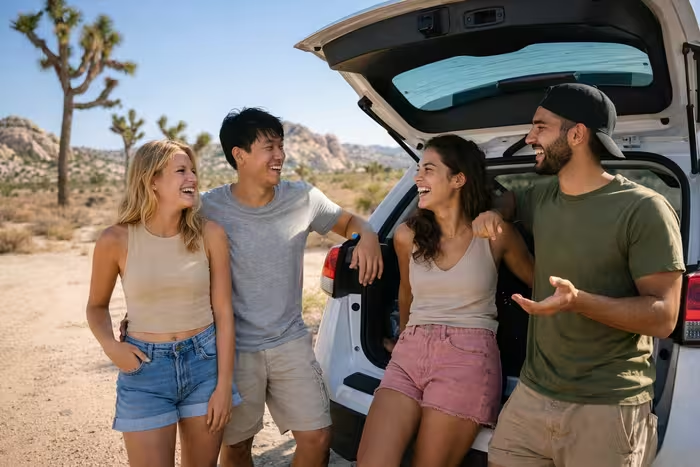
Joshua Tree is where two deserts meet — the Mojave and the Colorado — creating a landscape of unusual trees, large boulders, and wide-open sky.
Why students go: The park is one of the best stargazing locations in Southern California. On a clear night, the Milky Way is visible to the naked eye — something many students have never experienced before.
Where to stay: Most student groups stay in a motel or shared Airbnb in the town of Joshua Tree or Twentynine Palms, just outside the park entrance. Budget motels start around $60-90/night for a room, and a shared Airbnb can bring the per-person cost down to $30-50/night.
What to know: The park entrance fee is $30 per vehicle (split between your group). A rental car is required — the park has no public transport, and distances inside the park are large. Total cost for a weekend (car, fuel, accommodation, park fee, food) typically comes to $120-200 per person.
Tip: Bring more water than you think you need. The desert is dry, distances are deceptive, and there are very few places to buy supplies inside the park.
Big Bear Lake
Distance: 260 km northeast Travel time: 3 hours by car Budget: $120–250
Big Bear offers something most international students don't expect from California: mountains, pine forests, and — in winter — snow.
What to do: In summer, hiking, kayaking, and mountain biking around the lake. In winter, Big Bear Mountain Resort offers skiing and snowboarding, often just a few weeks after you were surfing in Pacific Beach.
Where to stay: Cabin rentals are the classic option. A group of 4-6 students can rent a cabin with a fireplace and kitchen for roughly $150-250 per night total.
What to know: A rental car is needed. In winter, roads may require chains — a legal requirement in California when posted. If you've never driven in snow, this is worth considering when deciding who drives.
Tip: Check road conditions before leaving. CalTrans (the California transport authority) posts real-time updates at roads.dot.ca.gov. Winter storms can temporarily close mountain roads.
Las Vegas
Distance: 530 km northeast Travel time: 5 hours by car / 1 hour by flight Budget: $150–350
Las Vegas is the most ambitious weekend trip from San Diego — and one of the most popular among CEL students.
How to get there: Budget airlines (Frontier, Spirit) regularly offer one-way flights for $30-60 if you book early. A rental car works too, especially if you split the drive and fuel costs with classmates. The drive through the desert is part of the experience.
What to do: The main Strip is walkable, and many attractions are free to see — the Bellagio fountains, themed hotels, and people-watching included. Food ranges from $10 buffets to world-class restaurants. Shows and entertainment vary widely in price.
Organised option: CEL organises group trips to Las Vegas, which simplifies logistics and keeps costs lower than planning independently.
Tip: Hotel rates in Las Vegas vary dramatically depending on the day of the week and time of year. Booking well in advance and comparing prices across several sites can save a significant amount — rates for the same room can differ by 50% or more depending on when you book.
Weekend Trips vs. Day Trips: Which Need an Overnight?
Not every destination on this list requires a full weekend. Here's a practical breakdown:
La Jolla, Tijuana, and Los Angeles are all reachable without a car — by bus, trolley, or train.
| Destination | Day trip? | Weekend trip? | Notes |
|---|---|---|---|
| La Jolla & Torrey Pines | Yes | Not needed | 30 min away — best as a half-day |
| Tijuana | Yes | Optional | 3-5 hours is enough for a first visit |
| Ensenada | Possible but rushed | Recommended | Best as an overnight combined with Tijuana |
| Los Angeles | Possible but rushed | Recommended | One full day feels tight; two days is ideal |
| Palm Springs | Possible | Recommended | Worth an overnight to enjoy at a relaxed pace |
| Joshua Tree | No | Yes | Too far and too much to see for a single day |
| Big Bear Lake | No | Yes | The drive and activities need at least one overnight |
| Las Vegas | No | Yes | A day trip is not realistic |
How Students Usually Organise Their Trips
Most weekend trips start with a conversation in the student lounge or at the shared apartment pool. Someone suggests a destination. A few classmates are interested. Within a day or two, a group of 3-5 students has formed — often from three or four different countries.
This happens more easily in small schools. At CEL, with an average of 7 students per class, you speak with everyone from day one — not just the person sitting next to you. By the end of the first week, most students already know enough classmates to plan a trip together.
Students who connect early tend to travel more. The practical advice: say yes to the first group plan, even if the destination isn't your top choice. The friendships formed on early trips are usually what make the rest of the stay more social and more active.
They book a rental car, find an Airbnb, and split costs. The planning itself — comparing prices, negotiating dates, figuring out directions — happens in English, because it's the only shared language. By the time they leave on Friday afternoon, they've already had more real English practice than most textbooks cover in a week.
CEL also offers organised weekend excursions for students who prefer a ready-made option. These are especially popular in the first few weeks of a stay, when everything is still new.
For a closer look at how students spend their weekday afternoons and how these trip plans come together, read what students actually do after class in San Diego.
Frequently Asked Questions
Can I take weekend trips from San Diego without a car?
Yes. La Jolla and Torrey Pines are reachable by bus. Tijuana is accessible by trolley and walking. Los Angeles is connected by the Amtrak Pacific Surfliner. For destinations like Joshua Tree, Palm Springs, or Big Bear, most students rent a car and split the cost with classmates.
How much does a weekend trip from San Diego cost on a student budget?
Depending on the destination, expect $10-80 for a day trip (La Jolla, Tijuana) and $100-350 for an overnight trip. The biggest cost factors are accommodation and transport — sharing an Airbnb and splitting a rental car keeps both affordable.
Can international students on an F-1 visa visit Mexico from San Diego?
F-1 visa holders need a travel endorsement on their I-20 form from their school before leaving the US. The travel endorsement is a signature confirming that your programme is active. Without it, re-entry is not guaranteed. ESTA and tourist visa holders can cross freely with a valid passport. Contact CEL's admissions team before planning any trip across the border.
What are the closest weekend trip destinations from San Diego?
La Jolla and Torrey Pines are about 30 minutes north. Tijuana, Mexico is about 30 minutes south. Both work well as day trips and require no car.
Does CEL organise weekend trips for students?
Yes. CEL offers weekend excursions through a local tour operator, covering transport and planning. Destinations vary and include popular trips like Las Vegas and other Southern California highlights.
If you're considering San Diego as a destination to learn English, weekend trips like these are part of what makes the experience more than just a language course. You can explore available courses and start dates, or check housing options to see what daily life looks like.













%20(Blog).avif)