


When students decide to learn English in California, most of their attention naturally goes to the classroom.
And that’s exactly where it should start.
At CEL in California, USA, classes run from 8:45 to 12:00, with intensive programs continuing from 12:30 to 14:00. Those hours are focused and structured. Small groups. Individual feedback. Real interaction. This is where accuracy develops, vocabulary expands, and confidence is built intentionally.
But here’s what experienced students discover quickly:
Progress accelerates when structured mornings and active weekends start reinforcing each other.
If you’re exploring programs through CEL USA, it helps to understand this early. The classroom builds precision. The city builds fluency.
Both matter.
Why Weekends Matter When You Learn English in California
There’s a misconception that immersion alone is enough.
From what we see every year, students who rely only on “living abroad” often plateau. Without correction and structured repetition, mistakes fossilize.
At the same time, students who study intensively but remain socially passive miss something equally important.
You need both.
In class, you learn how to express ideas clearly.
Outside, you test those ideas in unpredictable situations.
In our schools, students usually notice that Mondays feel different after an active weekend. Participation becomes more natural. Speaking feels less rehearsed. Questions are more precise.
That interaction between structure and exposure is what makes California powerful for language learning.
San Diego: Ocean, Focus, and Academic Depth
Students at our language school San Diego often describe the city as manageable.
Not small. Not quiet. Manageable.
You can walk to the beach after class. You can meet classmates without complicated logistics. Coastal temperatures typically range between 18–24°C, making outdoor plans realistic most of the year.
Academically, San Diego is also where our boutique structure becomes most visible. Classes average around 7 students, which means you speak every day — not occasionally. Participation is active. Feedback is direct. You’re known by name.
That foundation changes how weekends feel.

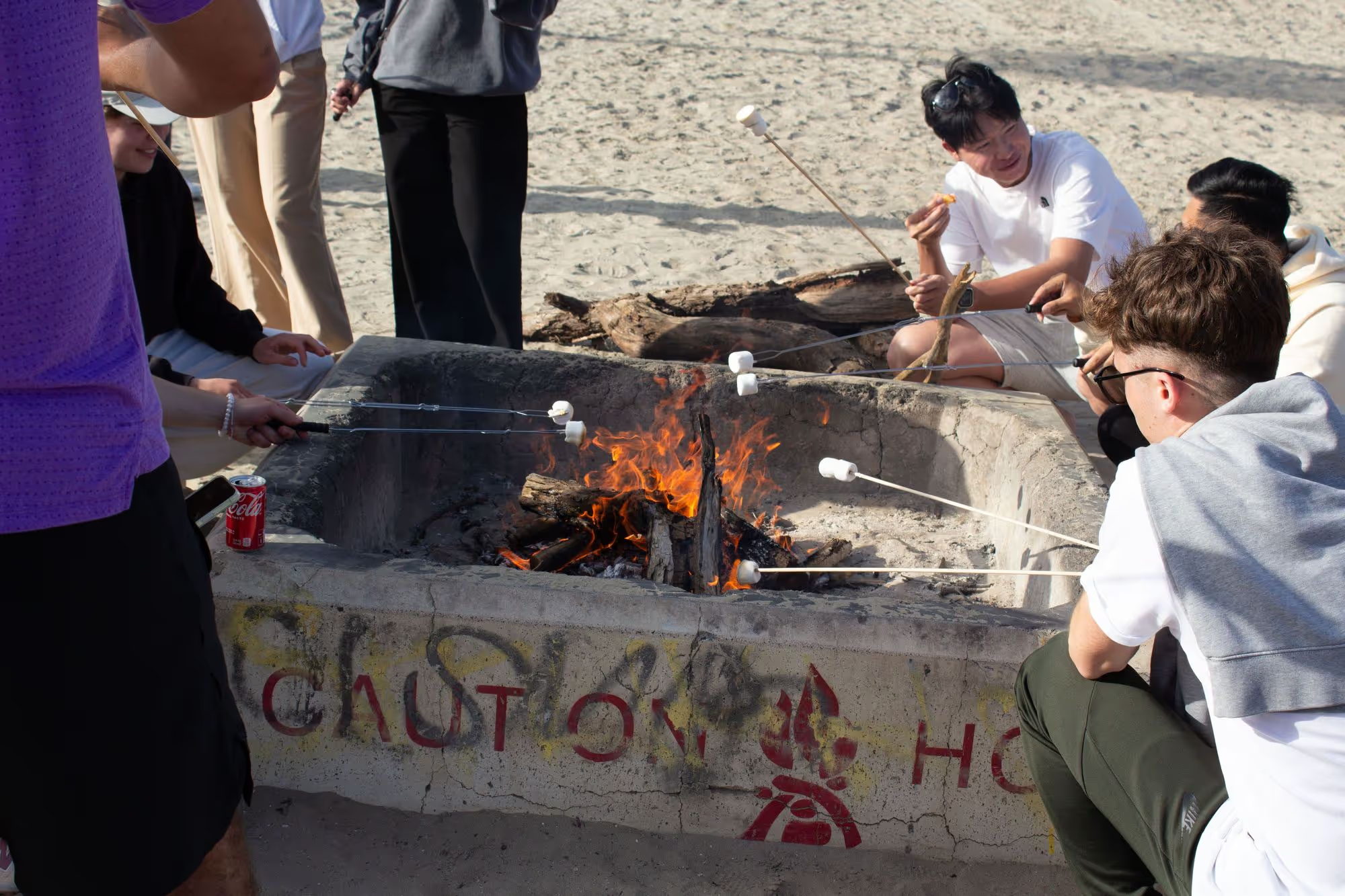
Beach & Coastal Energy
Hiking above the ocean at Torrey Pines, with wind coming off the Pacific and conversations shifting between English and laughter, doesn’t feel like studying — but it is exposure.
Kayaking in La Jolla requires listening to instructions, reacting quickly, asking follow-up questions naturally.
From what we see every year, students who engage in these low-pressure environments improve listening speed and spontaneous speaking faster than those who remain only within international groups.

Theme Parks & Shared Experiences
SeaWorld is close. Disneyland and Universal Studios are a few hours north.
Students often join organized school excursions. Others coordinate independently.
Navigating tickets, transport, and timing requires practical communication. Functional English builds confidence.
Career Development & Real-World Observation
San Diego is also where students can combine General English with Career Development electives.
For those students, weekends become observational training. After discussing negotiation, AI, project management, or presentation skills in class, they start noticing communication patterns everywhere — in restaurants, retail stores, networking events.
They return on Monday with sharper awareness.
A common pattern across our locations is this: when academic structure and real-world observation connect, progress becomes intentional — not accidental.
Road Trips & Initiative
Students often plan short road trips together — sometimes joining larger organized excursions, sometimes creating their own plans after asking our team for practical guidance.
Driving to Joshua Tree. Spending a weekend in Las Vegas. Exploring small coastal towns.
Organizing accommodation, calculating fuel costs, clarifying insurance terms — all in English.
That independence builds quickly when the academic base is solid.
San Diego suits students who value:
- Smaller classes with consistent participation
- Outdoor access
- A socially relaxed but academically focused environment
It may feel too calm if you’re looking for constant urban intensity. For that, Los Angeles offers a different rhythm.
Los Angeles: Scale, Momentum, and Creative Exposure
Choosing a language school Los Angeles — particularly in Santa Monica — means stepping into a larger ecosystem.
Los Angeles does not organize itself for you. You organize yourself within it.

Santa Monica & Venice
After classes finish at 12:00 or 14:00, students head to the pier, cycle toward Venice, or explore local cafés and farmers’ markets.
Under the lights of the Santa Monica Pier, surrounded by music and street performers, English becomes fast and unscripted.
In our schools, students usually notice that big-city environments reduce fear. You’re one person among thousands. Mistakes feel smaller.
Theme Parks & Urban Movement
Universal Studios and Disneyland are major weekend destinations for students who learn English in California.
Theme parks create immersive communication environments — announcements, instructions, spontaneous group decisions.
Some students join organized excursions. Others plan independently.
Both approaches build real-life fluency.
Museums, Markets & Creative Neighborhoods
Los Angeles offers art walks, museums, rooftop cinemas, international restaurants, and diverse communities.
If you’re interested in media, entrepreneurship, or creative industries, the city provides context for professional English in motion.
You don’t just hear the language. You observe how it operates at scale.
Los Angeles suits students who:
- Enjoy dynamic urban environments
- Thrive in diversity
- Want constant exposure
It may feel overwhelming if you prefer simplicity and short distances.
Beyond the Cities: Bigger Weekends in California
Some of the most memorable weekends go beyond the immediate city.
Las Vegas.
National parks.
Desert landscapes.
Every week, we organize optional social activities during the week and larger weekend excursions, giving students structured opportunities to connect beyond class. At the same time, many students create their own plans together.
From what we see every year, students who take initiative — even in small ways — return more confident.
They speak more decisively.
They hesitate less.
They worry less about mistakes.
Even exploring a farmers’ market, trying new restaurants, or visiting a museum creates language exposure that textbooks cannot replicate.
The classroom prepares you.
The weekend activates you.
For practical details on each destination — transport, budget, and what to know as an international student — see our weekend trips from San Diego guide

A Real Weekend Shift
It’s Sunday evening in San Diego.
Four students who met in morning classes have just returned from a short road trip. They had to ask for directions, compare hotel options, and clarify insurance terms — all in English.
On Monday at 8:45, they arrive slightly tired but noticeably different.
More relaxed when speaking.
More willing to take risks in discussion.
Less focused on perfection.
No teacher assigned this.
But structured small classes gave them the base to try.
Who This Is — and Is Not — For
California offers opportunity. It does not guarantee transformation.
This environment works well if you:
- Value structured academic mornings
- Are willing to use English actively outside class
- See weekends as part of your learning process
It may not suit you if you:
- Prefer staying only within your own language group
- Expect entertainment alone to improve your English
- Avoid situations that feel mildly uncomfortable
Learning English in California requires participation.
The city will not do the work for you.
But it will reward initiative.
What Students Realize Later
Months after returning home, students rarely remember a specific grammar exercise.
They remember:
- The first time they handled a problem entirely in English
- The weekend they organized independently
- The moment they stopped translating in their heads
In our schools, students usually notice that their biggest growth came from the interaction between structure and exploration.
Morning clarity.
Afternoon reinforcement.
Weekend activation.
Before deciding where to learn English in California, ask yourself which environment matches your personality and learning style — not just your travel wishlist.

FAQ: Learning English in California & Weekend Activities
What do students do on weekends when they learn English in California?
Students join organized excursions, visit theme parks, explore national parks, attend farmers’ markets, or plan independent road trips. Most combine structured school activities with personal exploration, using weekends to practice English in real-life situations.
Are weekend activities included in California language schools?
Most schools offer optional weekly social activities and larger weekend excursions. Participation is voluntary, allowing students to balance structured opportunities with independent plans. Organized options make it easier to meet classmates and explore safely.
Is San Diego or Los Angeles better for learning English?
San Diego suits students who prefer smaller classes and a manageable coastal environment. Los Angeles fits those who thrive in larger, fast-moving urban settings. Both provide strong academic structure combined with real-world exposure.
Do weekend trips really improve English skills?
Yes — when combined with structured classes. Weekend experiences create spontaneous communication situations that reinforce vocabulary, listening skills, and confidence developed during morning lessons.
Final Thoughts
If you plan to learn English in California, don’t choose between classroom quality and real-life experience.
Choose both intentionally.
Structured mornings from 8:45 to 12:00 — or intensive programs until 14:00 — build precision.
In San Diego, small classes averaging around 7 students create academic depth.
Across San Diego and Los Angeles, weekends build fluency, independence, and confidence.
One without the other is incomplete.
Together, they create momentum.




.avif)

.avif)


