Categories
Study Abroad

Learn English Abroad – USA Study Tips

Dreaming of learning English in the USA? This guide explains how to pick the right city, course, and visa, plus what everyday life looks like in San Diego and Los Angeles. Practical, inspiring, and packed with insider tips to help you make the most of your study-abroad adventure.

Learn English Abroad – USA Study Tips

Quick answer: To learn English in the USA successfully, choose an accredited language school, study in small interactive classes, and immerse yourself in daily life in English. The key is balance—solid preparation, active participation, and living your English experience every day.

Imagine stepping out into the California sunshine, hearing different accents around you, and realizing that this isn’t just a trip abroad—it’s the start of your new life in English.

Why the USA is one of the best places to learn English

Every year, thousands of students travel to the USA to improve their English. It’s a country where learning extends beyond the classroom.

1. Global relevance
American English dominates international business, technology, and media. Learning it in its natural environment gives you confidence and cultural fluency that can’t be taught from a book.

2. Accent and clarity
The American accent is clear and widely understood, which helps learners communicate effectively in global contexts.

3. Academic quality
The USA sets the standard for language education. Accredited schools are reviewed for teaching excellence, student care, and outcomes. The Commission on English Language Program Accreditation (CEA) and ACCET are among the most respected accrediting bodies.

4. Cultural diversity
No matter which city you choose, you’ll meet people from everywhere—Latin America, Europe, Asia, the Middle East. This mix makes learning dynamic and fun.

Ready to learn English in the USA? Discover all CEL schools and course types across California and beyond.

How to choose the right language school in the USA

The right school can turn a language course into a life-changing experience. Here are the factors that matter most when selecting a language school in the USA.

Accreditation and reputation

Always check accreditation. It guarantees that the school meets academic and administrative standards and that your course hours and certificates are recognized.

Class size and methodology

Small groups are key for fast progress. With around 7 students per class, teachers can focus on your individual strengths and challenges. Interactive lessons, group projects, and role-plays encourage constant speaking—essential for confidence.

Location and learning environment

Your surroundings influence how you learn. Being near cafés, beaches, and cultural spots means you practise English everywhere, not only during class hours.

Courses and flexibility

Your starting point depends on your current level of English.

  • Beginners and lower-intermediate students usually start with a General English program to strengthen grammar, vocabulary, and listening comprehension before adding more specialized content.
  • Intermediate and advanced students can go straight into programs that include electives, such as conversation, academic writing, pronunciation, or exam preparation.
    This flexible approach allows you to progress at your own pace—once your core skills are solid, you can personalize your learning path with electives that match your academic or career goals.

Student support

Good schools provide placement tests, academic guidance, and personal assistance with housing and visa questions. You should feel supported from your first email until graduation day.
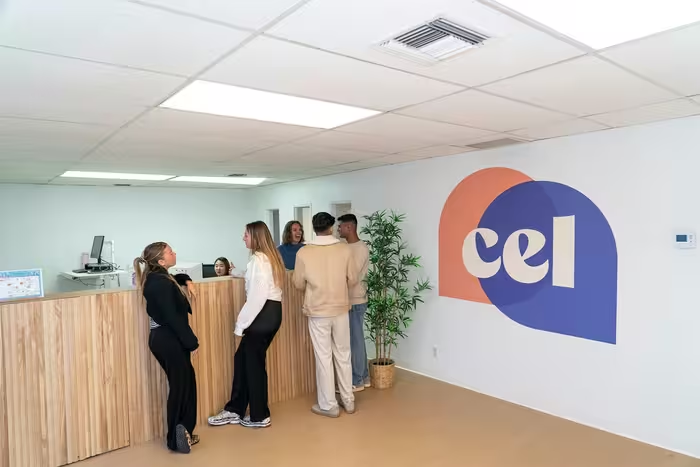
At CEL we care about our students - you will not only benefit from small classes while learning English in the USA, but also from our personal support.

Visas, accommodation, and practical matters

Understanding visas

The visa you need depends on your weekly lesson load:

  • Full-time study (≈18 hours or more per week) generally requires an F-1 student visa.
  • Part-time study can often be done with a tourist visa or ESTA under the Visa Waiver Program.

Your school will help you prepare the necessary documents and guide you through the process.

Accommodation choices

You’ll spend as much time at your accommodation as in class—so choose carefully.

  • Homestays offer cultural immersion and daily English practice with local hosts.
  • Shared apartments provide independence and an international atmosphere with classmates from around the world.
  • Some destinations even offer premium apartments with pools or fitness areas — perfect for relaxing after a day of learning.
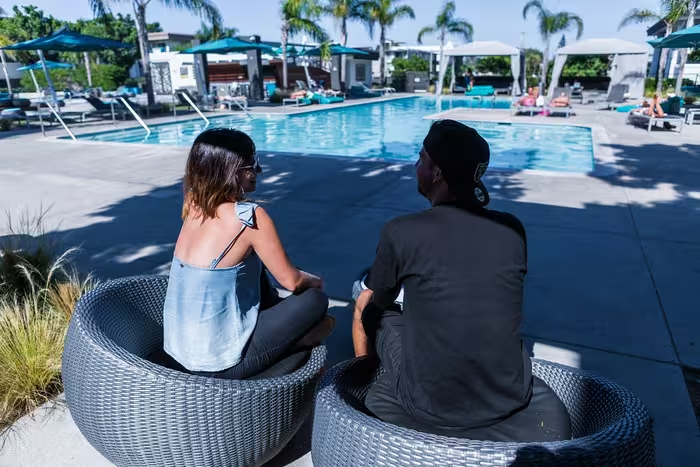
CEL offers a widerange of high quality accommodation options where you can feel at home during your language course in the USA.

Everyday life

Life in the USA is practical and student-friendly. Most campuses are close to supermarkets, cafés, gyms, and beaches. Walking or biking to class is common, and public transport connects easily to city attractions.

Budget and value

While the USA can seem expensive, coastal cities like San Diego often offer better value than larger hubs like New York or San Francisco. Think long-term: the more time you spend surrounded by English, the greater the return on your investment in fluency and confidence.

Learn beyond the classroom

The best part of studying English abroad is that learning never stops.

Everyday English

Speak English at every opportunity—ordering lunch, chatting with classmates, asking for directions. These small interactions make language natural.

Activities and social life

Most schools offer weekly activities, from conversation clubs to city tours or volunteering. They’re designed not just for fun but for real-world practice.

Cultural insight

Movies, sports, local festivals—these experiences reveal how English connects to American culture. You’ll understand humour, expressions, and idioms in ways no textbook could teach.

Confidence and growth

At first, speaking may feel intimidating. But soon you’ll find yourself thinking in English, joking with classmates, and expressing your opinions freely. That’s when you know you’re truly fluent.

Read our related post: Unlocking Culture and Opportunity – Why Language Schools Go Beyond English.

Life on the West Coast: San Diego & Los Angeles

San Diego – study by the ocean

Life in San Diego moves at a relaxed, sunny pace. The school is just a short walk from the beach, and mornings begin with the sound of waves. Students study in bright classrooms, enjoy lunch on open terraces, and spend afternoons swimming, doing yoga, or exploring Pacific Beach. Weekends mean adventures to La Jolla, downtown festivals, or desert trips with new international friends.

The result? You live and learn English naturally—surrounded by friendly locals and endless sunshine.

Los Angeles – study in the city of creativity

If you prefer a faster rhythm, Los Angeles (Santa Monica) offers an energetic mix of culture and opportunity. Classes are minutes from the beach, and after school you can explore art galleries, film studios, or concerts.

On weekends, students hike the Hollywood Hills, shop at outdoor markets, or relax by the ocean. The city’s diversity makes every conversation an English lesson—each accent, each story adds something new.

Making it personal

Whether you choose laid-back San Diego or vibrant Los Angeles, you’ll join a global community that values curiosity, openness, and learning. Many students say their stay in California shaped not only their English but also their outlook on life.

Frequently Asked Questions

How long does it take to become fluent in English?
It depends on your starting level and how much you practise. Many students notice significant improvement after 8–12 weeks of intensive study.

Do I need an F-1 visa to study in the USA?
Only if you study full-time (around 18 hours or more per week). For shorter or lighter programs, you can usually enter on a tourist visa or ESTA.

Can I change my course type after arrival?
Yes. Academic teams regularly review progress and help you adjust your course or intensity to match your evolving goals.

What is the average class size?
CEL maintains small classes—around seven students—so teachers can focus on individual progress and speaking practice.

How can I make the most of my stay?
Speak English daily, participate in school activities, and use weekends to explore. The more you connect, the faster you’ll improve.

Key Takeaways

  • The USA offers world-class education and daily immersion opportunities.
  • Choose a small, accredited language school for faster progress.
  • Plan your visa and accommodation early for a smooth start.
  • Practise English constantly—both in and outside the classroom.
  • Experience life on the California coast in San Diego or Los Angeles.

Ready to plan your next step?
Discover how CEL Language Schools can help you learn English by the ocean and live an unforgettable adventure abroad.


Frequently Asked Questions

Chris
Chris
Thebing
CEO
Chris
Study Abroad
First Week at a Language School Abroad: A Daily Guide

First Week at a Language School Abroad: A Daily Guide

Your first week at a language school abroad has a clear shape: pre-arrival prep, Saturday housing check-in, Monday placement and orientation, then a steady weekday rhythm. A practical day-by-day walkthrough of Week 1 at CEL San Diego and Vancouver

Study Abroad
How to Stay Connected With Friends and Family While Studying Abroad (Without Losing the Experience)

How to Stay Connected With Friends and Family While Studying Abroad (Without Losing the Experience)

Staying in touch during your language stay: keep strong connections with family and friends without missing your experience in Vancouver. Clear routines, time zone tips, and the right balance help you truly settle in.

Lokales Leben
Wie sicher ist San Diego für internationale Sprachschüler?

Wie sicher ist San Diego für internationale Sprachschüler?

San Diego gilt konstant als eine der sichersten US-Grossstädte. Dieser Beitrag zeigt die Kriminalitätsdaten, die Quartiere, in denen CEL-Studierende leben und lernen, sowie die praktischen Sicherheitsgewohnheiten, die im Alltag wirklich zählen.

Student Stories
Taking a Gap Year to Study in San Diego: My Dream Came True!

Taking a Gap Year to Study in San Diego: My Dream Came True!

Hannah from Korea spent a month at CEL San Diego during her gap year—and loved it. From structured, high-level classes that boosted her speaking skills to making international friends and exploring local highlights, her time was both educational and unforgettable. She recommends CEL for anyone looking to improve English while enjoying life in the U.S.

Séjour linguistique à l’étranger
Séjour linguistique : parlez-vous vraiment assez anglais ?

Séjour linguistique : parlez-vous vraiment assez anglais ?

Parlez-vous vraiment assez pendant un séjour linguistique ? Découvrez comment la taille des classes, le style d’enseignement et l’environnement influencent votre progression à l’oral.

Vita Locale
Vivere il sogno di Santa Monica: dove le pause studio significano vista sull’oceano

Vivere il sogno di Santa Monica: dove le pause studio significano vista sull’oceano

Scopri cosa rende Santa Monica la destinazione da sogno per imparare l’inglese a Los Angeles — corsi stimolanti, vita in spiaggia e la vera esperienza californiana.

USA & Canada
What It’s Like to Study English in Canada Year-Round: A Vancouver Guide

What It’s Like to Study English in Canada Year-Round: A Vancouver Guide

Vancouver changes with every season — and so does your study-abroad experience. Discover what it’s really like to study English in Canada year-round, from summer sunsets to winter mountain trips, and how each season shapes life at CEL Vancouver.

Séjour linguistique à l’étranger
Comment rester en contact avec ses proches pendant un séjour linguistique (sans passer à côté de l'expérience)

Comment rester en contact avec ses proches pendant un séjour linguistique (sans passer à côté de l'expérience)

Comment rester en contact avec ses proches pendant un séjour linguistique sans passer à côté de l'expérience ? Conseils pratiques sur le décalage horaire avec Vancouver, les applis au Canada, le roaming, et l'équilibre qui protège votre séjour.

2026-10-04
2026-10-01

How do you successfully learn English in the USA?

To successfully learn English in the USA, students need a balance of structured classroom time and daily conversational practice. When you choose a CEL program in San Diego, California, the progression often becomes much faster because the environment naturally encourages speaking. Most students begin noticing substantial improvements in fluency after 8 to 12 weeks of intensive study. This timeline assumes you are attending a school accredited by the Accrediting Council for Continuing Education and Training (ACCET) or the Commission on English Language Program Accreditation (CEA). Accreditation guarantees that your academic curriculum meets rigorous standards. A major advantage of programs meeting these criteria is class size. With around 7 students per class, teachers have the time to focus directly on your individual speaking and listening needs. Full-time study requires about 18 hours of instruction per week, meaning you spend a significant portion of your day actively using the language. The result is a steady climb in confidence and practical ability.

Choosing the right visa and accommodation plays an enormous role in your overall experience. If you enroll in a full-time program, you will need an F-1 student visa. Lighter schedules allow entry on a tourist visa or the Electronic System for Travel Authorization (ESTA) program. If you want to learn English quickly, your choice of housing directly impacts how much you practice after class. Opting for a CEL homestay gives you immediate access to daily conversations with local hosts. Alternatively, choosing a shared apartment provides a highly social atmosphere where you mix with international classmates. Finding a balance between studying grammar and experiencing local culture makes the process feel much less like a chore.

The right school to learn English will provide academic pathways that adapt as you improve. Beginners usually start by focusing on core vocabulary and listening comprehension. Once those fundamentals are established, intermediate learners can shift toward specific electives like academic writing or pronunciation. This flexible approach lets you personalize your education based on your future career plans. It works. Spending your afternoons exploring coastal communities or joining a conversation club forces you to apply morning lessons to real-world situations.

What makes a language school the right fit to learn English?

A great school extends the learning experience far beyond the campus walls. When you study in a supportive city, everyday interactions become practical lessons. Ordering food at a cafe, asking for directions near the beach, and chatting with store owners all contribute to your fluency. Students who travel abroad to learn English and actively engage in school-organized activities tend to absorb the culture much faster than those who only study from a textbook. Participating in weekly events or weekend excursions builds lasting friendships and forces you to think in your new language rather than constantly translating from your native tongue.

Location dictates your routine. Being situated close to public transport, supermarkets, and outdoor recreation areas makes daily life simple. You can walk or bike to class, which leaves you with more energy to focus on academics. Whether you are taking our private lessons to target specific weaknesses or joining group projects that simulate workplace meetings, the physical setting matters. Coastal destinations often provide excellent value compared to massive metropolitan centers, allowing you to stretch your budget over a longer period. Staying longer is the most reliable way to cement your new skills. Plan accordingly.

How can students accelerate their language progress?

Accelerating your progress requires consistency and a willingness to make mistakes as you learn English. Does it work? Yes. At first, speaking aloud in a new country feels intimidating. You might hesitate before answering a simple question or struggle to find the exact word you want to use. Over time, constant exposure reduces that friction. You will eventually notice a moment when you stop translating internally and simply respond. That shift happens because you are surrounded by the language every single day. Listening to different accents from international peers also sharpens your ear, making you highly adaptable in global business environments. To overcome common difficulties, immerse yourself in local media and casually converse with neighbors.

Teachers recommend speaking at every available opportunity. Even a brief chat before class begins helps warm up your brain for the day. Reviewing your progress regularly with academic staff ensures you remain in the correct course level. If a class feels too easy, academic directors will help you transition into a more challenging syllabus. You might decide to shift from general communication into specialized exam preparation if you plan to learn English for university admission. The ultimate goal is to build enough confidence that speaking feels entirely natural, whether you are writing an essay or telling a joke to a friend.

Frequently Asked Questions